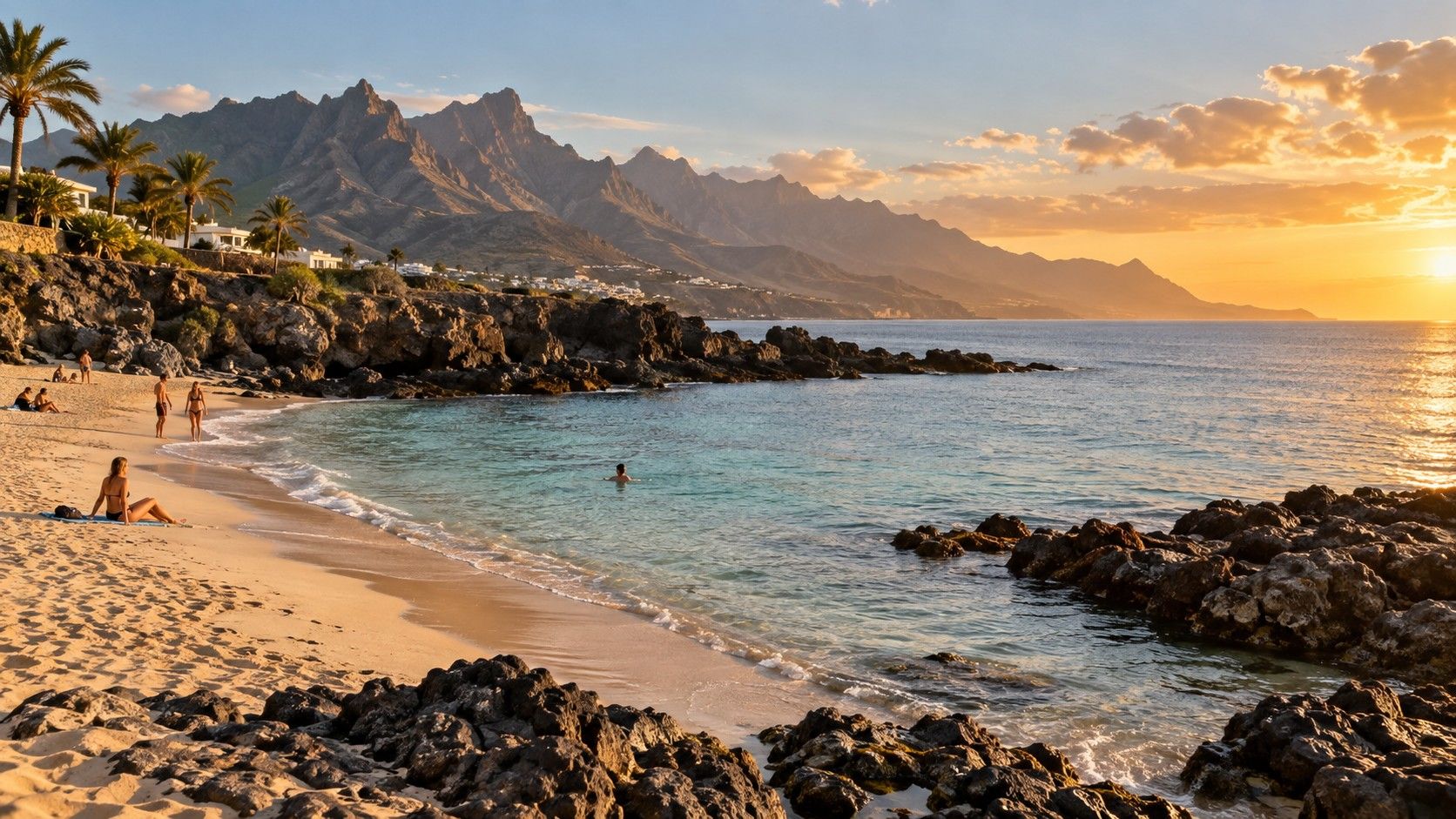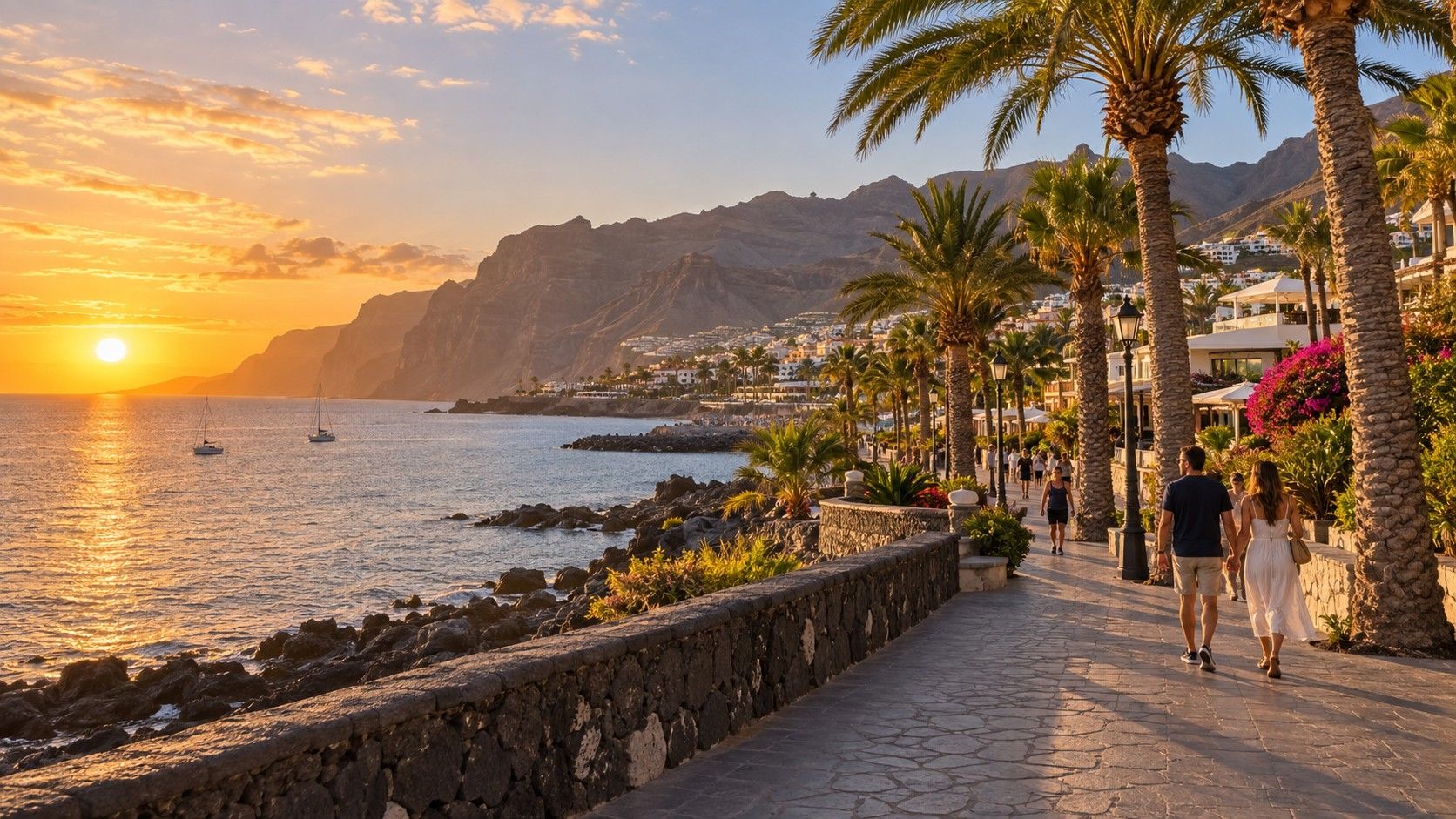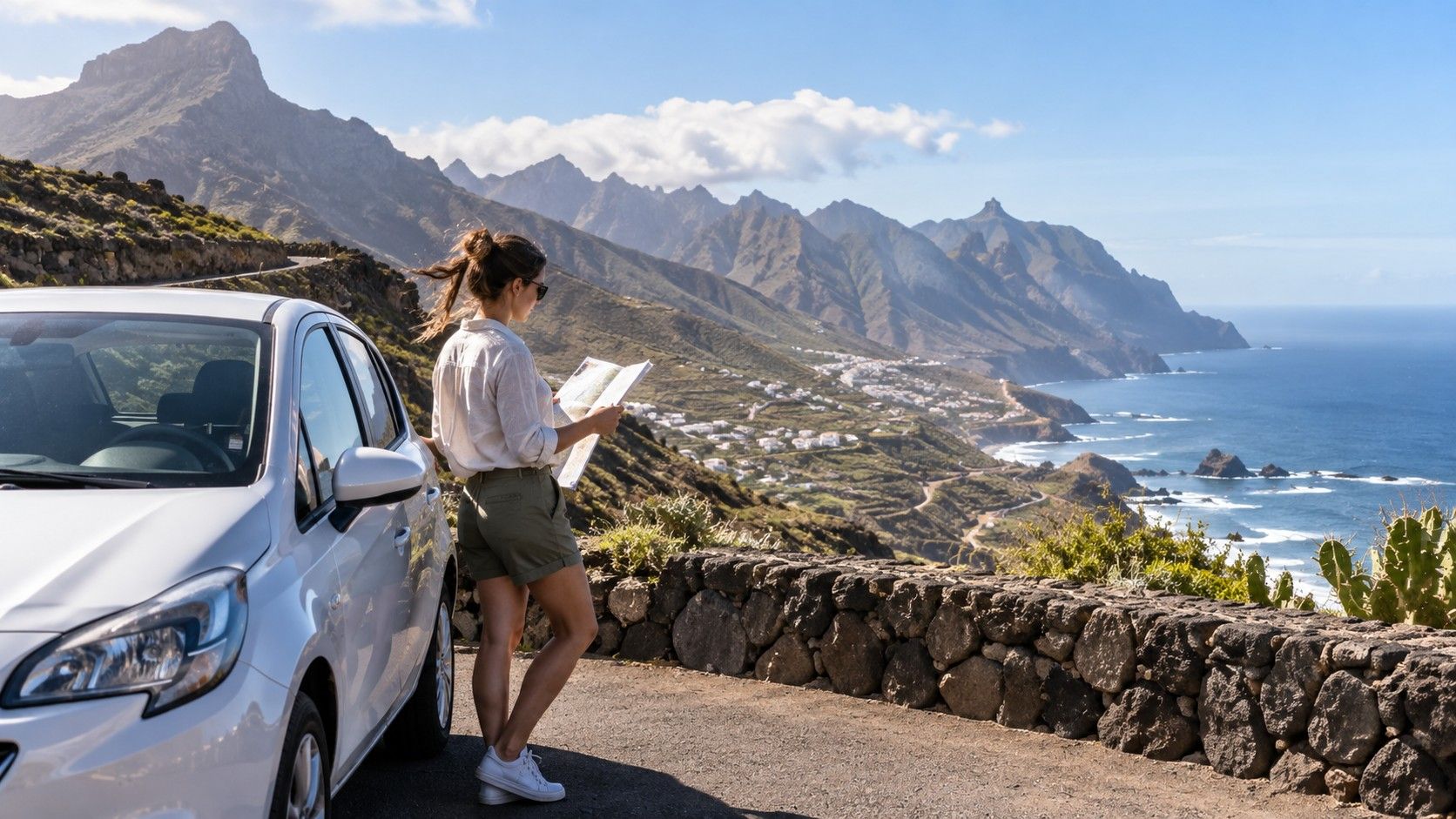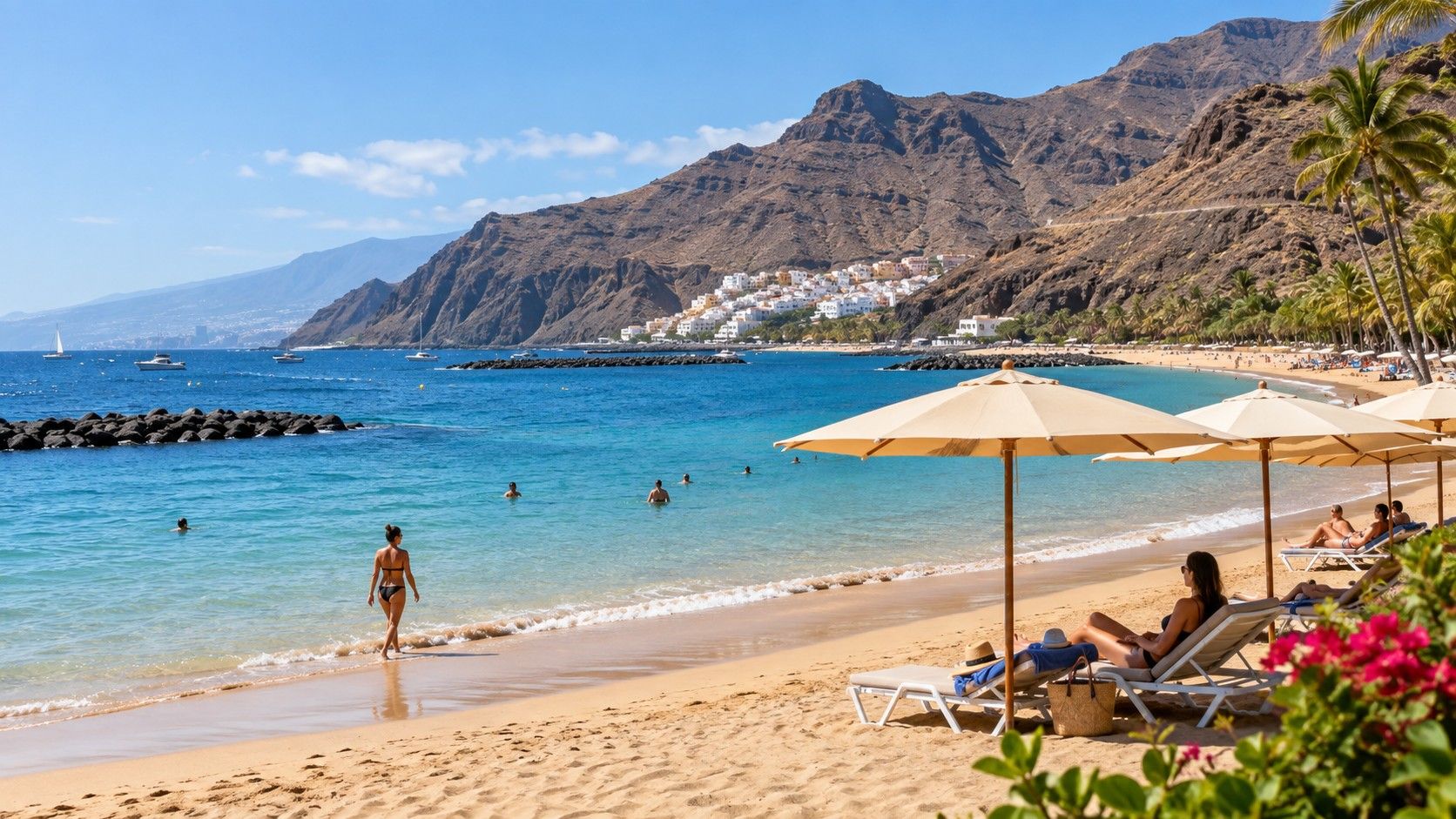
Tenerife weather in July and August is reliably warm, but it is a mistake to treat the island as one uniform beach forecast. A morning in Costa Adeje can start hot and dry, while Puerto de la Cruz has a lid of cloud and a breeze that makes breakfast outside surprisingly pleasant. Drive towards Teide and the temperature can fall quickly enough to make a sleeveless top feel optimistic. Summer is easy here when the plan has room for these changes.
What the height of summer actually feels like
July usually feels settled rather than oppressive on the coast. Daytime temperatures on the southern resorts commonly sit in the high twenties Celsius, with evenings warm enough for a late walk along the promenade. August often nudges hotter, especially in sheltered southern urban areas and on dark-sand beaches where the ground holds heat. Rain is unusual at sea level in both months, so a cancelled beach day is far more likely to be caused by wind, sea conditions or a tired child than by a wet-weather system.
The useful distinction is between the thermometer and the experience. Tenerife sits in the path of northeast trade winds. On an exposed coast, that airflow can take the edge off a hot afternoon; in a protected bay, it can disappear altogether. Humidity is generally lower than in many Mediterranean resort areas, which helps, but direct sun still has force. I would treat midday from about 12 to 4 as a period for shade, lunch, a pool, or an indoor stop rather than a test of holiday stamina.
South coast sunshine and the north coast cloud line
The south coast around Costa Adeje, Playa de las Americas, Los Cristianos and El Médano is the safer choice for people who want repeated beach days. It is drier, often sunnier, and usually warmer once the morning has cleared. El Médano is an exception worth understanding: its open position makes it popular with wind and watersports, but a parasol can become work there on a breezy day. Families looking for calm swimming tend to prefer the more sheltered bays farther west.
On the north coast, Puerto de la Cruz and the Orotava Valley are greener because cloud and moisture arrive more readily. Summer cloud is often low and patchy rather than a day-long downpour. It can be ideal for walking through town, visiting gardens, or having a less scorching lunch, then lifting later in the day. The north also has a more Atlantic feel at the water: waves and currents deserve more respect than a sunny photo suggests. A blue-looking sea does not turn every natural beach into a safe swimming spot.
| Area | Typical July-August feel | Best use | Check before leaving |
|---|---|---|---|
| Costa Adeje and Los Cristianos | Dry, warm, often calm | Resort beach days | UV level and shade at the beach |
| El Médano | Sunny but frequently windy | Watersports and walks | Wind strength and sea flags |
| Puerto de la Cruz | Milder, cloudier spells | Town, gardens, north-coast base | Cloud cover and surf conditions |
| Teide roads | Cooler and changeable | Scenery and highland walks | Temperature, wind and road notices |
Plan the beach and Teide as separate climates
A Teide National Park outing needs its own weather decision, even if the hotel balcony is cloudless. The drive climbs through several zones: coastal heat, drier slopes, pine forest and exposed volcanic ground. In summer the summit area and viewpoints can be much cooler than the resort, particularly when wind picks up. Strong sunlight arrives with little shade, and the dry air can hide how quickly people are becoming dehydrated. A refillable water bottle and a layer in the car are basic equipment, not overpacking.
Starting early helps in two ways. Roads and popular stopping points are quieter, and a morning walk is kinder before the heat builds. Later in the day, haze can soften distant views even when the sky is clear overhead. If the aim is a long hike rather than a scenic drive, check the route’s official access requirements and recent conditions before setting off. Summer heat, high altitude and an unfamiliar trail are a poor combination for improvising with one small bottle of water.
What to pack beyond swimwear
For a week split between coast and inland drives, pack for three temperatures. Lightweight clothes, a broad-brimmed hat, sunglasses and sunscreen cover the southern daytime routine. Add a thin overshirt or long-sleeved layer for sunset, ferries and restaurants with strong air conditioning. For Teide, a light windproof jacket and closed shoes make far more difference than a heavier holiday wardrobe. Trainers with a firm sole are useful even for short walks on loose volcanic paths.
Sun protection deserves more attention than many visitors give it. The island’s latitude, bright water and high ground can make exposure feel stronger than the air temperature suggests. Reapply after swimming and do not assume a breezy beach is a low-risk day. A small insulated bottle is useful in August, while a reusable tote keeps sandals, towels and a cover-up together when a beach plan turns into a town stop.
When wind, calima or sea flags change the plan
Most days need only a small adjustment: shift a windy beach afternoon to a sheltered cove, choose the north for a cooler lunch, or move a walk to early morning. The bigger interruption is a calima, when hot, dry air and Saharan dust reduce visibility and can make the air uncomfortable. It does not happen every summer day, but it is worth recognising. On a dusty or unusually hot day, strenuous hiking is less appealing, car windows and outdoor furniture collect fine grit, and people sensitive to respiratory irritation should take local health advice seriously.
Sea flags are another practical signal. Tenerife’s coast is not a hotel pool, and currents can be strong around open beaches. Red means stay out; yellow is a prompt to think about the swimmer, not a challenge to the strongest adult in the group. If the sea is rough, a saltwater lido, museum, long lunch, or a drive through the interior can save the day without pretending the conditions are fine.
A simple rhythm for a summer holiday
For July and August, I would put outdoor activity first, reserve the hottest middle hours for a slow meal or water, and use the evening for town streets and seafronts. Keep one flexible day if Teide is important, because a clear, less windy morning is more rewarding than forcing the trip into the only available slot. Check the forecast by area rather than typing Tenerife into one generic weather app, then compare it with wind and marine information for the exact beach. That small habit makes summer on the island feel far less variable than the maps first suggest.