The best beaches in Tenerife are rarely found by following a single list: the useful choice depends on whether you want an easy swim, a long walk, a surf session, or somewhere to sit out a breezy afternoon without spending half the day in the car.
Start with the sea you actually want to get into
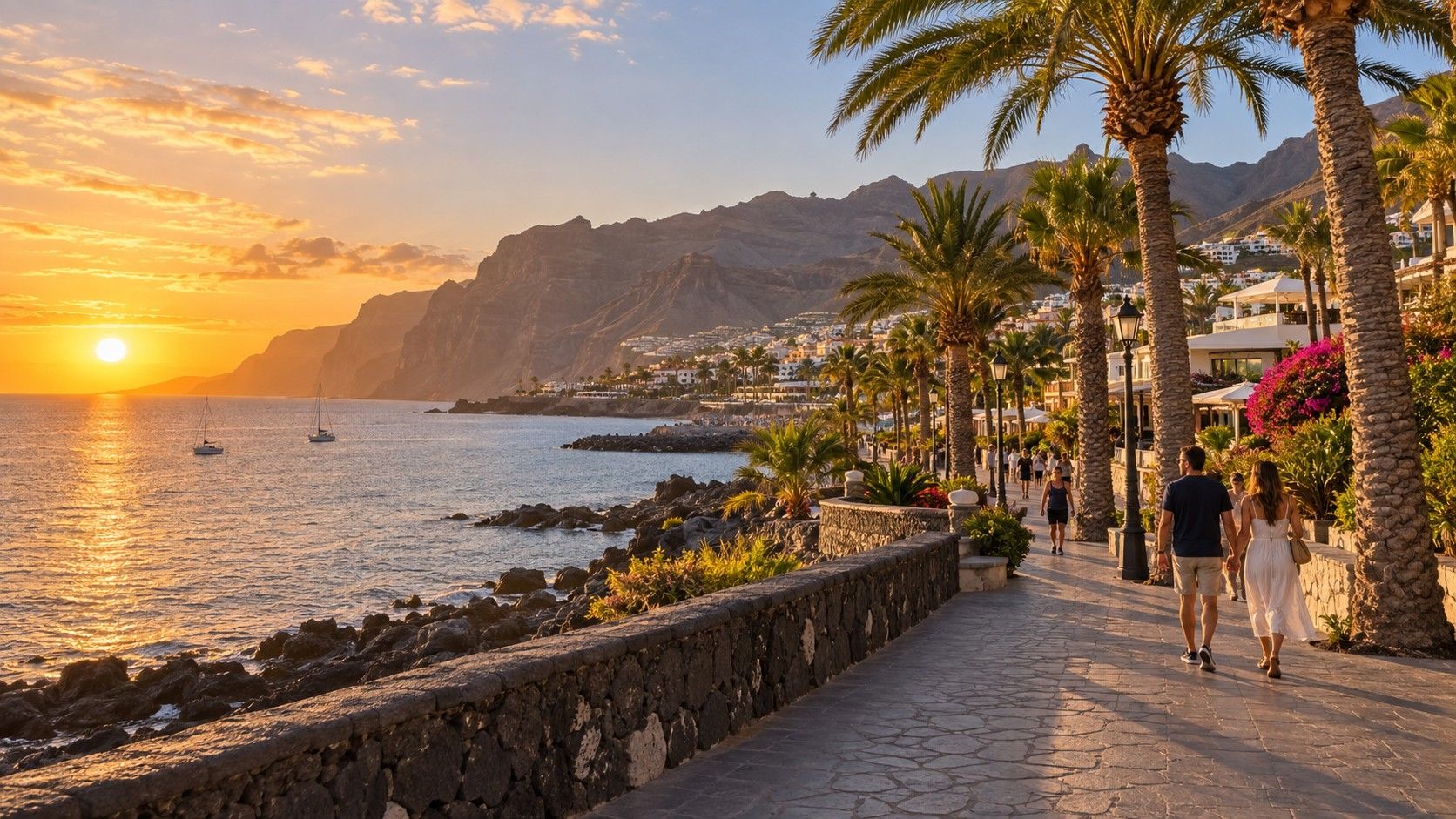
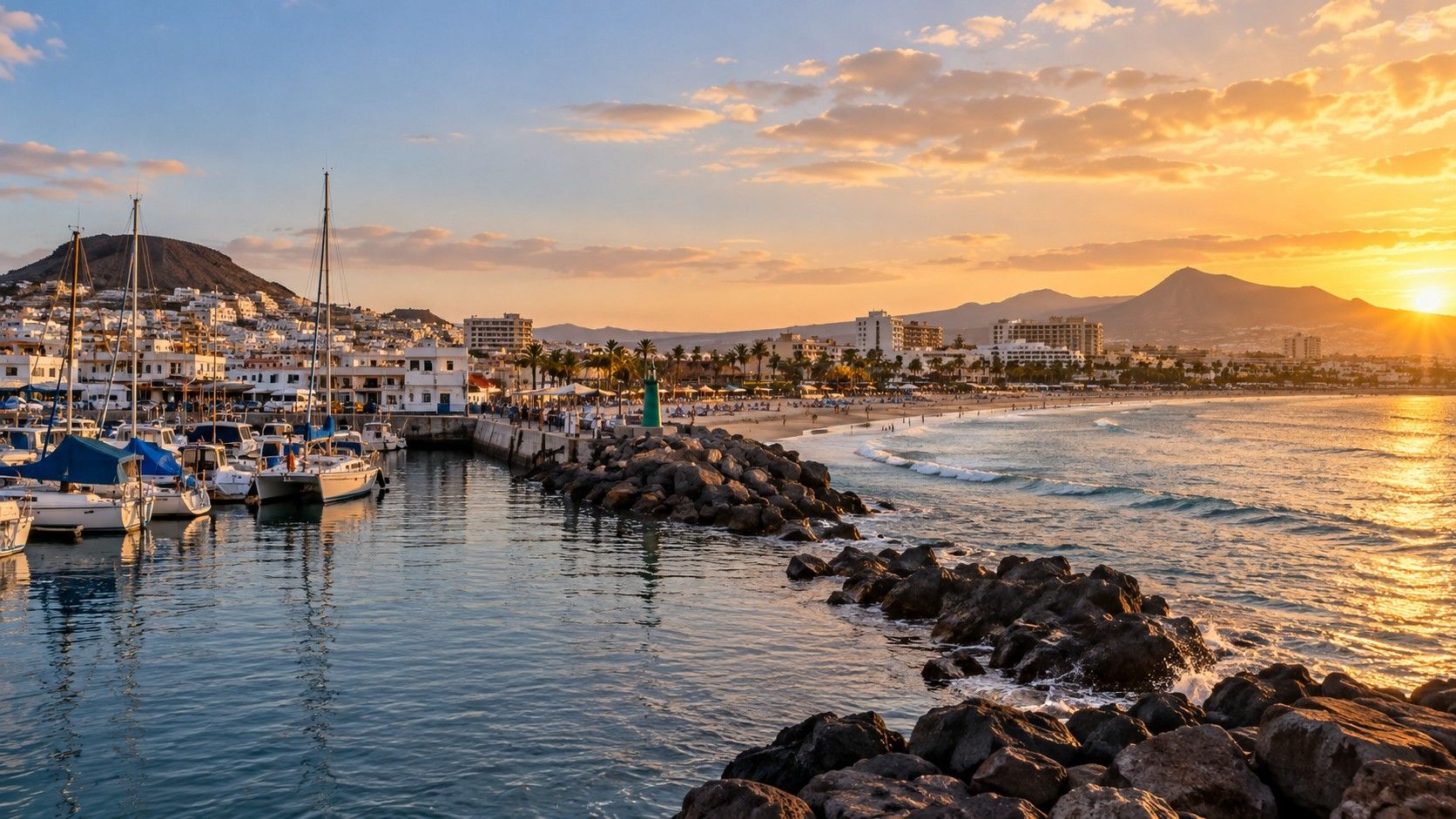
Tenerife is a compact island on a map, but its coast changes character quickly. The south-west around Costa Adeje and Los Cristianos is built around accessible holiday beaches, promenades and breakwaters. It is usually the sensible first choice for a traveller who wants to arrive in sandals, rent a lounger if needed and take a relaxed swim before lunch. Playa del Duque, Playa de Fañabé and Playa de las Vistas all fit that practical pattern, though they have different levels of bustle.
On the north coast, the Atlantic feels less domesticated. Puerto de la Cruz has beaches and pools, yet the swell and darker shore make it a poor substitute for the soft, shallow south on a day when children want uncomplicated paddling. I would treat north-coast bathing as condition-dependent rather than promised. Watch the flags, look at the water for several minutes, and accept that a beautiful view can still come with a no-swimming warning.
A first-time itinerary often works better when the beach is chosen after the forecast, not before the hotel. A cloudy or windy southern morning can be fine for a sheltered bay; a clear day with an easterly breeze can make El Médano feel lively or tiring depending on whether you brought a board or a paperback. The Atlantic Ocean sets the terms here, and the most contented beach days are usually the least rigid ones.
For a calm family day, use the sheltered south and east
Playa de las Vistas, between Los Cristianos and Playa de las Américas, is the easy answer when a mixed group cannot agree on much. Its broad sand, sheltered water and long seafront give everyone an exit route: one person can swim, another can walk for coffee, and nobody needs a complicated transfer back to the resort. It is busy in the middle of the day, so arriving before late morning makes the experience noticeably calmer.
Playa del Duque feels more polished, with pale sand, nearby hotels and facilities that reduce the small frictions of a beach day. That convenience costs more in the surrounding cafés and parking can be annoying at peak times. Playa de Fañabé offers a similar south-coast sea with a more animated promenade. Neither is a place for solitude, but both are reliable when the real priority is a safe-looking, manageable swim.
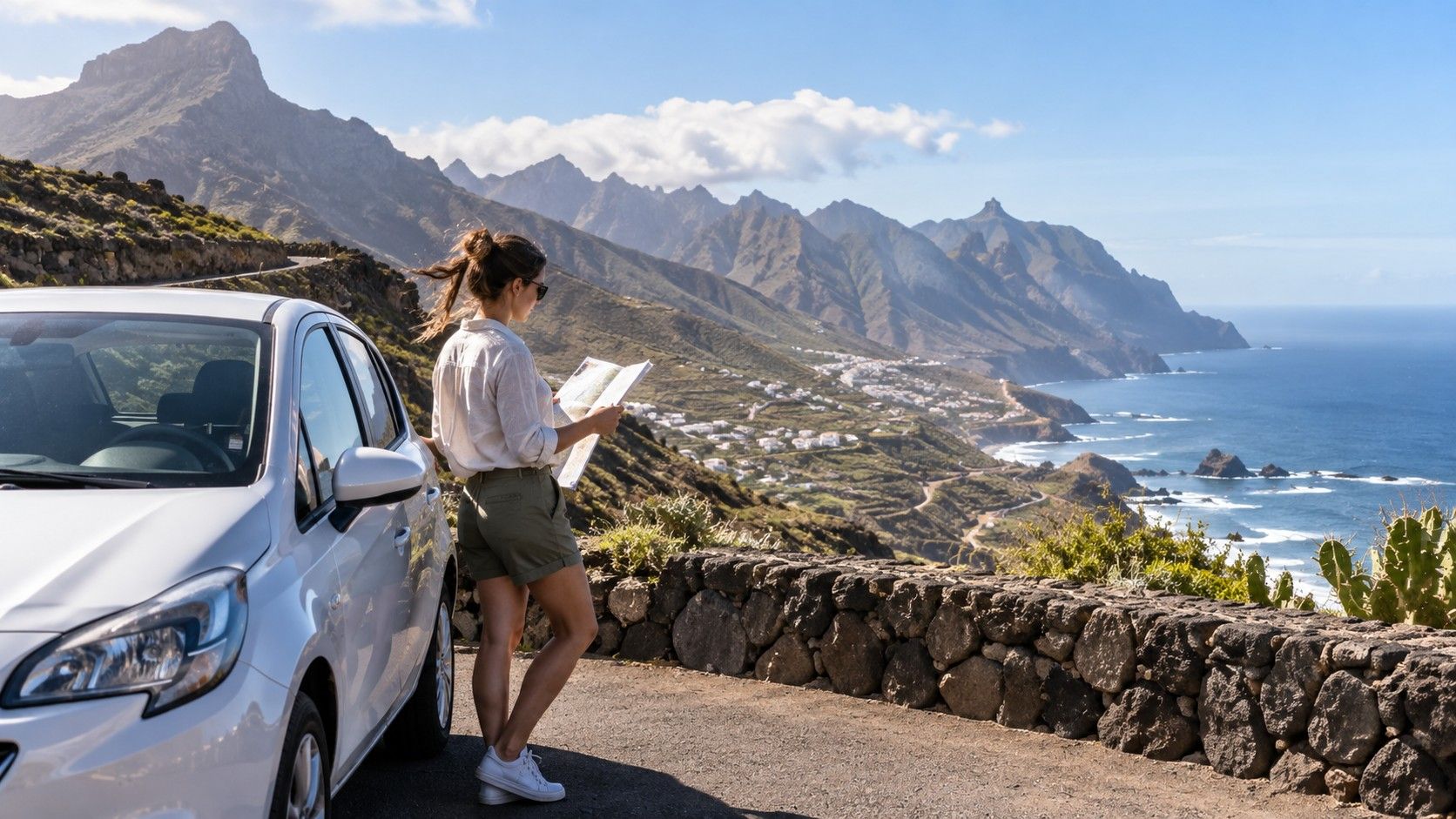
For a different sort of calm, drive north-east to Playa de las Teresitas near Santa Cruz. The beach is unusually wide and golden for Tenerife, with a protective breakwater that tames much of the open-water energy. It suits families and hesitant swimmers well. The trade-off is the journey: from the southern resorts it is a committed outing, so pair it with Santa Cruz or the Anaga viewpoint rather than treating it as a quick dip between breakfast and dinner.
| Beach | Best for | Practical caution |
|---|---|---|
| Playa de las Vistas | Easy swimming and a car-free resort day | Gets crowded after midday |
| Playa del Duque | Comfort, facilities and a tidy base | Prices nearby are higher |
| Playa de Fañabé | Families who want shops close by | Promenade can feel busy |
| Playa de las Teresitas | Calmer water and a day from Santa Cruz | Long drive from the south |
Choose El Médano when wind is part of the plan
El Médano is among the best beaches in Tenerife for travellers who dislike the resort-strip rhythm and do not mind a beach with a working, sporty atmosphere. The town is low-key by southern standards, the sand is open and the horizon feels broad. On a windy day you will see kitesurfers and windsurfers; that is the point, not a defect in the beach. It also means loose sand can be unpleasant on bare legs and an umbrella may be more trouble than shade.
The main beach by town is useful for a walk, a casual swim when conditions allow, and an unhurried lunch. For a longer stretch, Playa de la Tejita lies under Montaña Roja. It has more space and a wilder feel, but less shelter and fewer immediate services. Bring water, sun protection and something warm for the journey home. Even warm Tenerife afternoons can turn cool once the wind picks up.
I would not send a nervous swimmer to El Médano simply because the photos look inviting. Read the flags, avoid drifting beyond the marked swimming area, and keep an eye on children as the wind shifts. For an active traveller, though, this coast is more rewarding than a sheltered cove precisely because it changes through the day. Morning can feel quiet; by mid-afternoon it can belong to sails and kites.
Seek volcanic sand when the beach is also a landscape stop
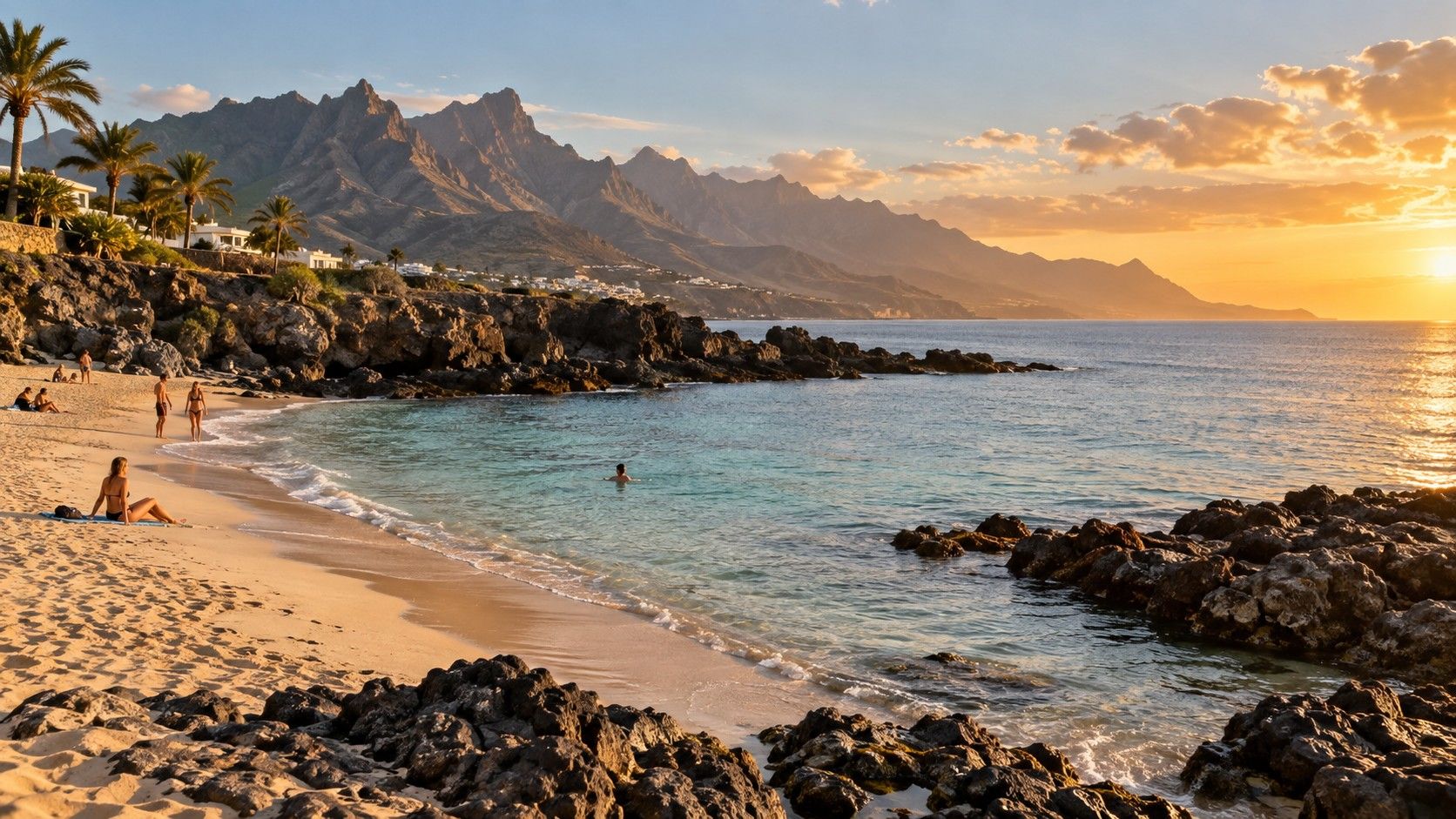
Black or charcoal sand gives many Tenerife beaches their distinctive look, but it changes the practical experience. The surface absorbs heat quickly, so the short walk from towel to water can hurt at midday. Footwear matters more than it does on pale resort sand. The darker coast is often paired with stronger surf, too, so it is worth separating a scenic stop from a swimming plan in your mind.
Playa Jardín in Puerto de la Cruz is a good introduction because its dark sand is framed by planted gardens and the town is close. The design makes it feel more cared for than many natural northern beaches, although weather still determines whether swimming is sensible. Nearby, the Lago Martiánez seawater pools can rescue a day when the sea is rough; they are a practical alternative, not an admission of defeat.
Further west, Playa de la Arena near Puerto de Santiago has dark sand and a more contained resort setting. It can be a convenient break when visiting Los Gigantes, but do not assume the cove is calm merely because it looks enclosed. Check the flag system before unpacking. For those happy to walk a little, the beaches around Benijo and Almáciga in Anaga offer dramatic coast and black sand, yet they are better viewed with caution than treated as easy family swimming spots.
Use the coast to shape the rest of the day
A Tenerife beach choice becomes easier when it has a second purpose. From Costa Adeje, a morning at Playa del Duque can run into a coastal walk toward La Caleta and a late lunch away from the loudest part of the promenade. From Los Cristianos, Playa de las Vistas is simple to combine with the harbour or a walk toward Playa de las Américas. These are good low-driving days, especially after a flight.
El Médano works naturally with Montaña Roja, provided you choose cooler hours for the walk and respect protected areas. Playa de las Teresitas pairs well with Santa Cruz's markets and streets, then an Anaga road viewpoint if you are comfortable with bends. Puerto de la Cruz makes sense alongside the botanical garden or old-town lanes. The black-sand beach is one part of the north, rather than the whole reason to cross the island.
That approach also keeps expectations realistic. Tenerife offers polished sand, rougher volcanic shores and surf beaches in one holiday, but each asks for a different sort of day. Leave room to swap a northern swim for a pool, or a windy beach for a south-coast bay. The beach that feels best is often the one that fits the conditions and your energy, rather than the one that wins an online ranking.
Five checks that prevent a frustrating beach day
First, look at the local flag before you commit to the water; a red flag ends the swimming question. Second, check the wind rather than temperature alone. A warm forecast can still mean sand in your eyes at El Médano or a chilly exit from the sea. Third, carry reef-safe sun protection, drinking water and footwear for volcanic sand. Shade is not guaranteed away from the resort beaches.
Fourth, decide whether you need toilets, lifeguards, food nearby or easy parking. Playa de las Vistas and Costa Adeje are forgiving if you forget a towel or need snacks; a natural beach in Anaga is not. Finally, avoid treating every sheltered-looking cove as a safe one. Currents and swell are difficult to judge from a photograph. On the wilder coast, ask locally, watch where regular swimmers enter, and be willing to stay on shore.
With those checks in place, the island becomes much easier to enjoy. Use the southern beaches for comfort, El Médano for wind and movement, Playa de las Teresitas for protected water, and the north for volcanic character. That is a better starting map than any universal claim about the best beach on Tenerife.