Weather in Tenerife is often described with one sunny icon, which is handy for a postcard and unhelpful for choosing a hotel. This is a steep volcanic island with coasts facing different directions and a high central spine. Costa Adeje may be dry and bright while Puerto de la Cruz has cloud on the hills, and Teide can be cold enough for a jacket. Once that pattern is expected, it becomes one of Tenerife’s advantages: a change of scenery can also be a change of temperature.
Start with the island pattern, not a single forecast
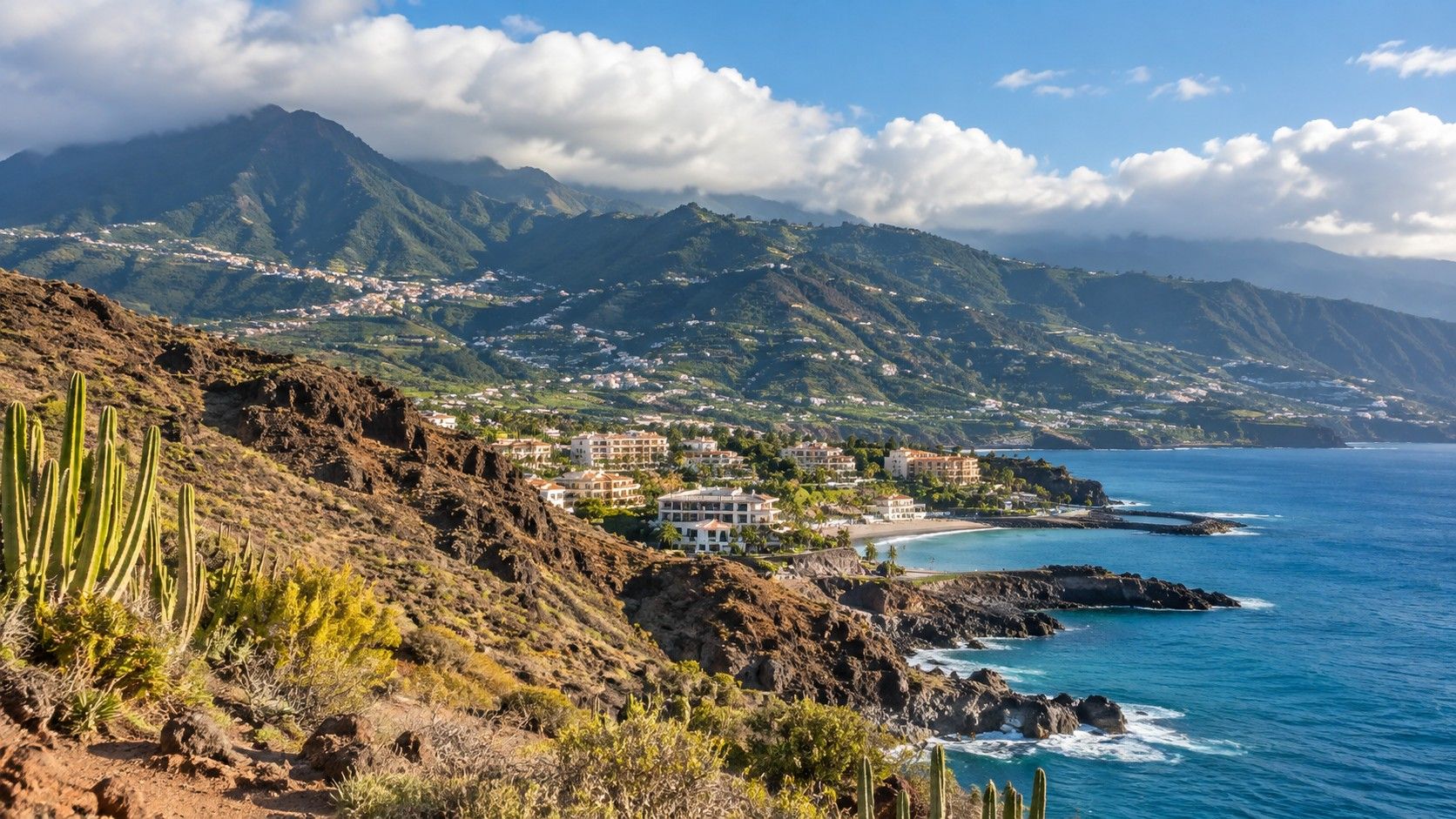
Northeast trade winds meet Tenerife’s higher ground and often leave more cloud and moisture on the northern side. The south and southwest sit in a relative rain shadow, so resorts from Los Cristianos through Costa Adeje to Playa de San Juan are usually drier and sunnier. That does not mean the north is bad weather. It is greener, less relentlessly hot in many seasons, and can suit travellers who prefer town life, gardens and short drives to a day under a fixed parasol.
Forecast apps compress this complexity. A cloud symbol for the island can mean low cloud over the Orotava Valley, while the south coast has a clear afternoon. Conversely, a hot inland reading says little about an exposed beach where wind is doing most of the work. Before a trip, save a few locations rather than relying on one Tenerife meteo result: your base, the planned beach, and any mountain destination. The difference is often useful, not alarming.
Choose a base around the day you want to have
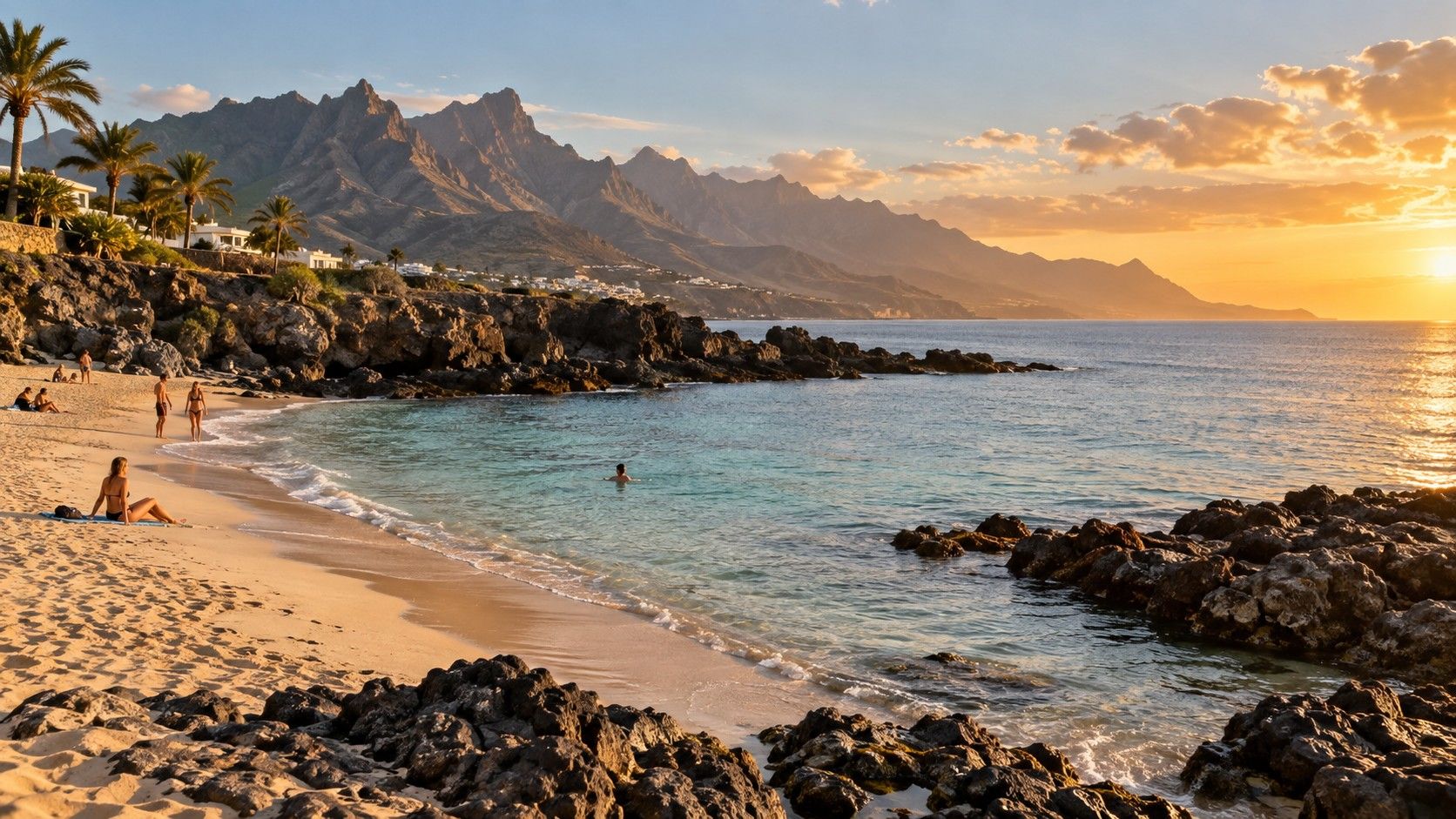
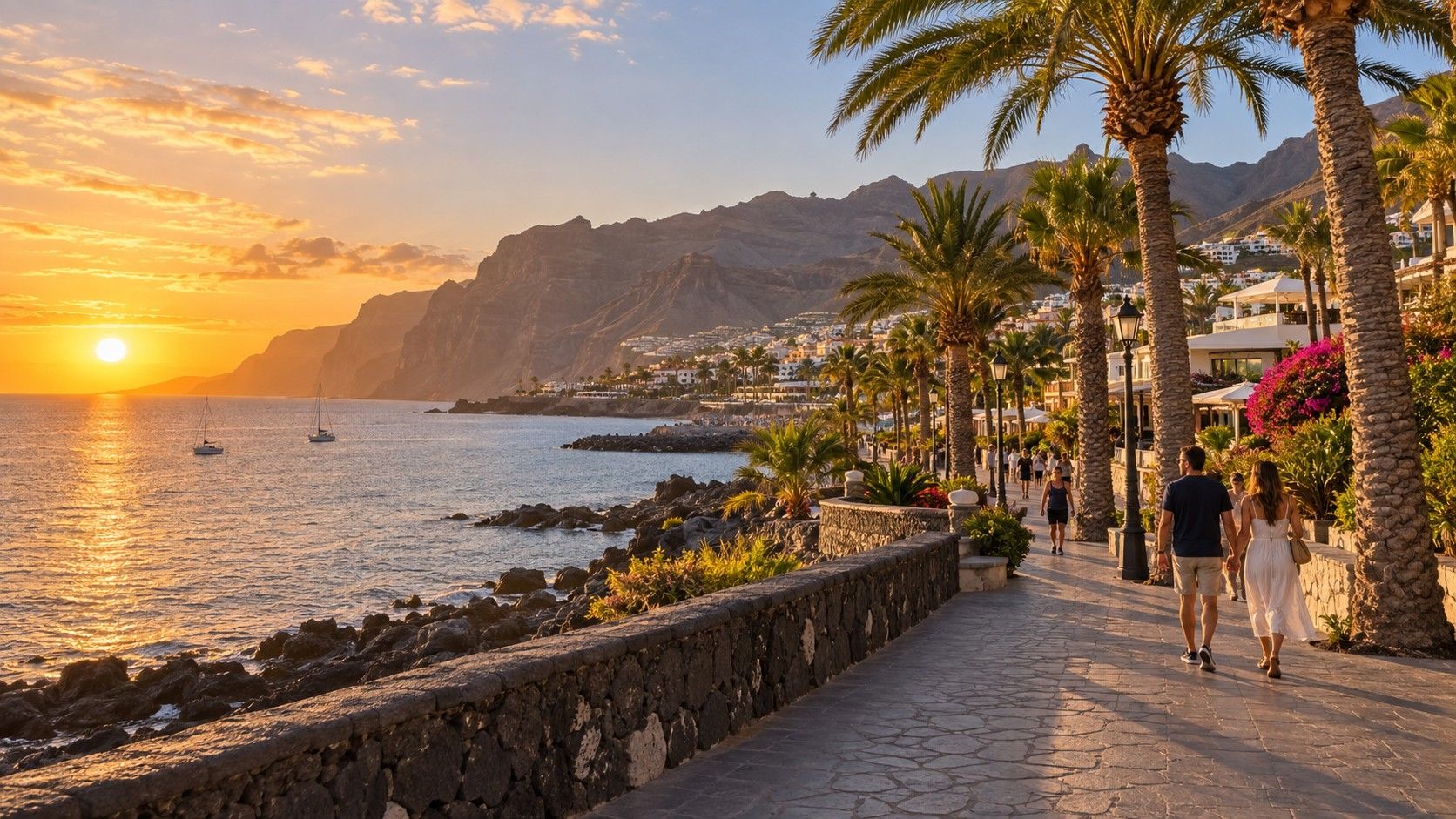
Costa Adeje is a sensible base for people who value dependable sun, resort services and sheltered swimming bays. It is also convenient for evening promenades and boat trips, though it can feel hot on still days. Los Cristianos has a busier, more lived-in centre and ferry connections, with similar southern conditions. Neither base guarantees a wind-free beach; the bay and time of day matter as much as the town name.
Puerto de la Cruz suits a different rhythm. It has older streets, a greener setting and easier access to the north coast and the Orotava Valley. Cloud can arrive more often, especially in the morning, but it can make walking through town comfortable when the south is baking. Natural northern beaches require care with swell and currents. For easy swimming, look for supervised conditions or use the town’s established seawater bathing areas rather than reading calm water from a distance.
| Base or area | Usual weather character | Works well for | Less ideal if you want |
|---|---|---|---|
| Costa Adeje | Dry, warm, sunny | Resort beach time and families | Cool afternoons and green scenery |
| Los Cristianos | Warm southern coast | Transport links and lively evenings | A quiet isolated beach base |
| El Médano | Sunny, exposed, windy | Kitesurfing and open coastal walks | Guaranteed calm parasol weather |
| Puerto de la Cruz | Greener, cloudier spells | Town atmosphere and north exploring | Unbroken resort sunshine |
| Teide National Park | Cooler, exposed, variable | Views, volcanic landscapes and hikes | Beachwear-only day trips |
El Médano and exposed coasts: wind is part of the deal
El Médano is a good corrective to the idea that south always means still and hot. Its open position brings regular wind, which is why it draws kitesurfers and windsurfers. On the right day the breeze makes a warm afternoon comfortable; on a stronger day it sends sand into bags, food and sunscreen. Choose it for its active atmosphere and broad coastal views, not because a general south-coast forecast promised a sleepy swim.
Wind also changes the feel of boat trips and cliff walks. A light jacket can be welcome on deck even in a warm month, while a cap needs to stay on rather than merely look useful. Check the marine forecast and beach flags near departure time. If conditions are choppy, swapping a boat excursion for a drive to a village or a longer lunch is usually better than spending half a day trying to enjoy motion sickness.
Altitude can rewrite a day out
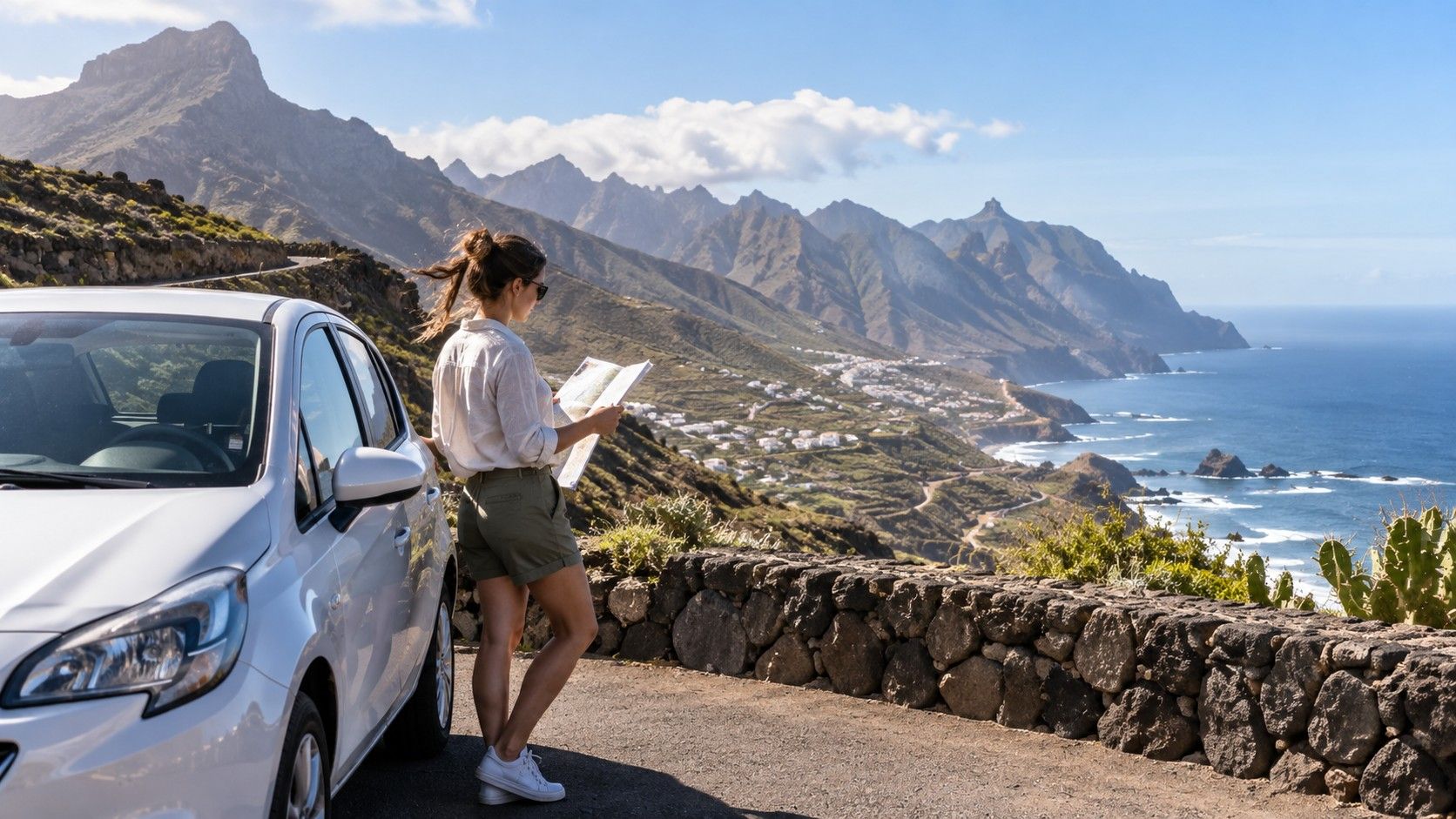
Teide National Park is the clearest example of Tenerife’s microclimates. The road rises from coast through dry slopes and pine forest to open highland terrain. A visitor leaving Costa Adeje in sandals can arrive at a viewpoint with cold wind, intense sun and temperatures that feel dramatically lower. The high elevation also makes exertion feel different. A short uphill path can be tiring for people accustomed to sea level, especially after a late night or without enough water.
Take closed shoes, drinking water and a windproof layer even for a sightseeing drive. Start early if you want a walk or a clear view; afternoon haze can soften the horizon. Weather changes at altitude should be treated as a reason to shorten or reroute a plan, not proof that the mountain trip was a failure. The lower forest roads, nearby towns and viewpoints can offer a rewarding alternative when exposed ground is too windy or visibility is poor.
Read a forecast without overreacting
Look first at temperature, wind direction and strength, cloud level, and marine conditions. Rain probability matters more on the north and in the highlands than on a southern beach, but even there it rarely tells the whole story. A short shower or low cloud may pass while another coast stays dry. Forecasts are strongest when used to choose between two suitable plans, rather than as a demand for certainty several days ahead.
Calima deserves separate attention. This influx of hot, dusty air from the Sahara can reduce visibility and make the air feel dry and heavy. It is not a normal daily feature, but if it arrives, strenuous exercise and long exposed walks become less appealing. Keep windows closed if dust is blowing in, drink more water than usual, and choose an easier schedule. Travellers with respiratory conditions should follow current local health guidance rather than relying on holiday habits.
Pack for flexibility, then use the island’s variety
A compact Tenerife wardrobe works better than a large one. Sun protection, swimwear and light clothes cover the coast; add trainers, a light long-sleeved layer and a windproof jacket for drives, ferries and Teide. The layer often spends most of the day in the car, but it earns its space when cloud sits over the north or wind arrives after sunset. A refillable bottle and a small bag for a cover-up make it easy to change plans without returning to the hotel.
The practical reward is freedom. Stay in the south and visit the north when you want cooler green scenery; use Puerto de la Cruz as a base and head south for a brighter beach day; leave the mountain decision until you have seen the morning conditions. Tenerife’s different weather zones are not a fault in the forecast. They are a reason to avoid locking every day to one beach or one temperature before you have even arrived.