A Tenerife black sand beach can be the most memorable part of a holiday, provided you arrive expecting volcanic heat, Atlantic waves and fewer built-in comforts than the pale, sheltered beaches around the southern resorts.
Dark sand is a volcanic fact, not a styling choice
Tenerife sits in the Canary Islands, where volcanic material has shaped much of the shoreline. Basalt and other dark rock break down over time into the grey, charcoal and near-black grains underfoot. The colour varies by beach: one cove may look deep black when wet, another brown-grey in dry sun. It is worth keeping that distinction in mind when photographs make every shore look identical.
The sand changes more than the view. Dark volcanic sand absorbs heat rapidly, particularly between late morning and mid-afternoon. I have seen people hop from towel to water on a beach that felt comfortable ten minutes earlier. Light sandals or water shoes are a sensible small item to pack, even if you usually walk barefoot on pale resort beaches. A thick towel also helps; the ground keeps its warmth long after the air begins to cool.
Many visitors expect every black sand beach to be remote and rugged. That is not the case. Playa Jardín in Puerto de la Cruz has landscaped surroundings and town facilities, while Playa de la Arena near Puerto de Santiago sits close to hotels and restaurants. Others, particularly on the north coast and around Anaga, feel much more exposed. The sand tells you something about Tenerife's geology, but it does not tell you whether the water will be calm.
Choose the north for atmosphere, not guaranteed swimming
Puerto de la Cruz is the easiest base for a first encounter with Tenerife's volcanic beaches. Playa Jardín has dark sand, palms and sculpted garden spaces, with the town close enough for coffee or a change of plan. It can feel welcoming on a calm day, yet the Atlantic retains the final say. When waves are large or the warning flags are up, treat the beach as a place to walk and look rather than a swimming pool with scenery.
That is the main adjustment for travellers arriving from Costa Adeje. The north has more cloud cover at times, greener slopes and a cooler mood, but it can also have stronger surf. If the water is unsuitable, Lago Martiánez offers seawater pools a short distance away. This is one of the better ways to save a north-coast day: keep the beach visit, then switch to the pools rather than pushing into rough water because the hotel day was planned around a swim.
Playa de San Marcos, west of Puerto de la Cruz near Icod de los Vinos, is another dark-sand option in a compact bay. The setting is useful for a slower day combined with lunch or a visit inland, although the surrounding slopes mean sun leaves parts of the beach earlier than on a broad southern shore. Parking and access can feel tighter than on a major resort beach. Arrive earlier if carrying chairs, a pram or a lot of beach gear.
Use the west coast when Los Gigantes is already on your route
Playa de la Arena, near Puerto de Santiago, is one of the more straightforward black sand beaches for a visitor staying in the south-west. It has a developed setting, a cove shape and services within easy reach, so it is less of an expedition than a northern natural beach. Its sand can be very hot in bright weather. Do not leave shoes in the car and assume the walk will be short; the final few metres can be uncomfortable.
This beach works well as part of a Los Gigantes day. See the cliffs in the morning, then decide whether the sea conditions and your energy still make a beach stop appealing. The afternoon sun can be strong, while the cove may have shade later depending on the season and where you sit. A simple meal in Puerto de Santiago afterwards is usually more sensible than trying to rush back across the island before traffic builds.
Los Guíos, by the Los Gigantes marina, has darker sand and a famous cliff backdrop, although it should not be confused with a wide, empty volcanic beach. It is compact and often busy. Pick it for the location and a short swim when conditions are favourable, not for an all-day spread of towels. Families who need more open sand may prefer Playa de la Arena; photographers and harbour visitors may be happier at Los Guíos for an hour or two.
| Beach | Why go | Check before settling in |
|---|---|---|
| Playa Jardín | Volcanic sand with Puerto de la Cruz nearby | Flags and swell; pools are a useful fallback |
| Playa de San Marcos | Small bay on a north-coast outing | Parking, early shade and wave conditions |
| Playa de la Arena | Convenient stop near Los Gigantes | Hot sand and busy periods |
| Benijo | Wild coast and strong scenery | Access, tide, surf and limited facilities |
For a wilder shore, make safety the first decision
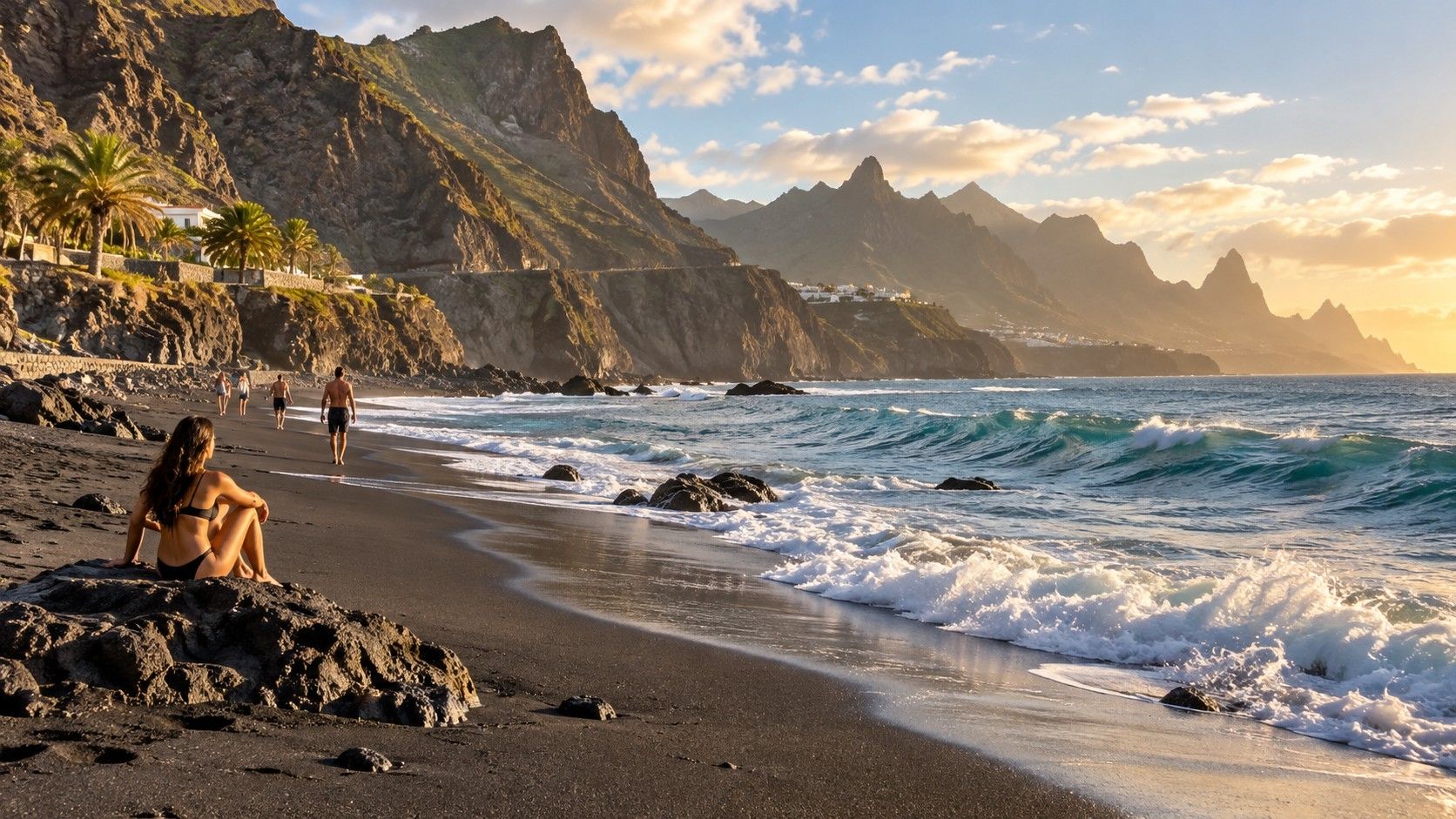
Benijo and Almáciga in the Anaga area are often mentioned when people search for black sand beaches Canary Islands travellers remember. Their appeal is obvious: dark shore, jagged rocks, surf and steep green slopes behind the beach. They also demand more restraint than a resort bay. The road through Anaga has bends, parking is limited, and the sea can be powerful even when the beach looks quiet from above.
Natural beaches have little natural shade. Carry water, a hat and a layer for later in the day. Sun can disappear behind the cliffs or cloud can roll in quickly, leaving a wet swimsuit surprisingly cold. There may be no convenient shop close by, so this is not the place to discover you forgot food or sunscreen. Check access information before driving out and do not block narrow roads while looking for a better parking space.
Most importantly, do not use a black sand beach as proof that the water is safe. Waves can dump hard on a steep shore and currents can pull beyond the break. A red flag means stay out; a yellow flag means the day calls for extra judgement, not bravado. If there are no clear swimming conditions, walking the sand, taking photographs and having a meal in Taganana can still make the trip worthwhile.
Plan around heat, waves and the lack of shade
Timing changes the comfort of volcanic sand. Early morning is gentler underfoot and usually better for a walk before the beach fills. Between noon and four, footwear becomes essential in strong sun. The sand also reflects less glare than pale sand, which can make people underestimate the heat they are absorbing. Reapply sun protection after swimming and bring more water than you expect to drink.
Waves deserve a separate check because the north and west can look calm for a few minutes, then change with a set of larger swells. Watch the sea before putting down towels. Notice whether people are actually swimming, where they enter and how quickly the water returns over the sand. Keep children well back from the wash zone, where a sudden wave can knock them over even if they are not trying to swim.
Facilities vary sharply. Playa Jardín and Playa de la Arena can support a fairly normal beach day with food and services nearby. Benijo asks you to be self-sufficient. The difference matters for travellers with young children, mobility needs or a preference for predictable toilets and shade. There is no prize for choosing the wildest beach; pick the level of infrastructure that lets you relax rather than manage problems all afternoon.
Build a black-sand stop into a wider island day
Puerto de la Cruz is a natural pairing for Playa Jardín. Start with the beach while the sand is cooler, then walk into town, visit the botanical garden or use Lago Martiánez if the sea is rough. This gives the day a second option and makes the longer drive from the south feel worthwhile. It also keeps your schedule flexible when north-coast weather is less sunny than the forecast for your hotel.
On the west coast, pair Playa de la Arena or Los Guíos with Los Gigantes rather than trying to claim several beaches in one afternoon. The roads between places are slower than they look, and the cliff viewpoints are more enjoyable without clock-watching. A late beach swim after a boat trip can be pleasant, but only if the sea conditions are still right and you have a dry layer for the evening.
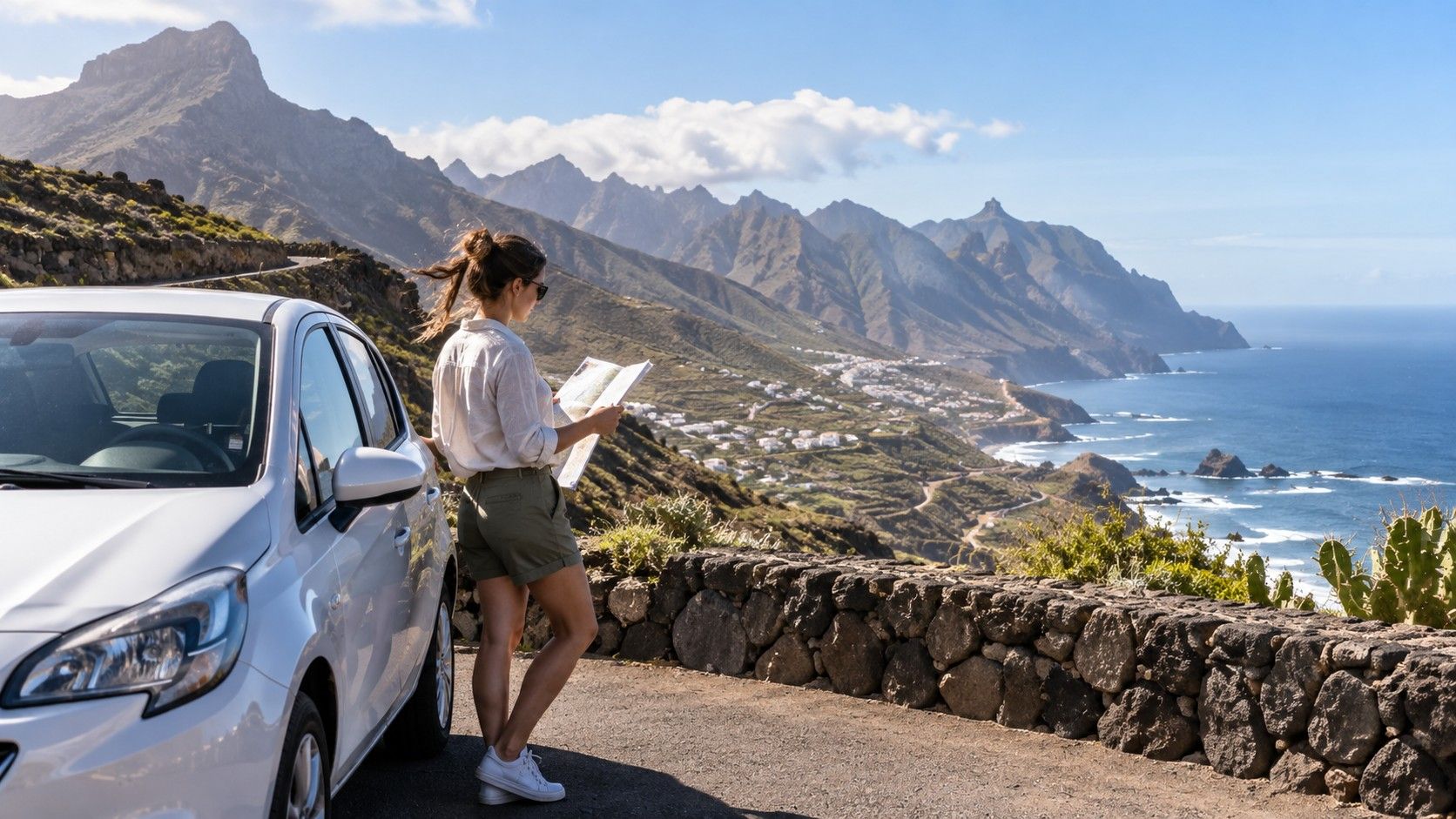
Anaga is best treated as a landscape drive with a beach possibility, not a guaranteed swim day. Stop at viewpoints, allow time for the road, and use Benijo or Almáciga when the flags and tide make sense. The dark sand is part of the reward, but so are the villages and the changing coastline. This approach takes pressure off the water and makes a weather-led change of plan feel normal.
A short packing list makes the difference
For any Tenerife black sand beach, take shoes that can get wet, drinking water, a proper towel, sun protection and a cover-up for wind or late-afternoon shade. Add snacks for natural beaches and a waterproof pouch if you want to carry a phone near the surf. A beach umbrella is useful only where there is enough space and the wind is mild; on exposed shores it can become a nuisance.
Before you leave your accommodation, check the route, parking expectations and beach flag status if available. At the beach, look again rather than relying on an earlier update. Conditions are local. A sheltered south-coast beach may be the better swim choice on the same day that a black-sand north beach is perfect for a walk and photographs.
Volcanic sand gives Tenerife a more grounded, less resort-polished side. Go prepared for warm feet and a lively Atlantic, choose a developed beach when you want ease, and reserve the wilder coves for a day when you are happy to let the coast set the pace. That is the most reliable way to enjoy the island's dark beaches without turning a good outing into an avoidable struggle.