Rental reviews are useful when they describe a repeatable part of the experience, and much less useful when they report one rushed moment at a desk. That is the right frame for anyone reading PlusCar Tenerife reviews before a holiday. You are not trying to find a provider with no unhappy customer; you are trying to understand the collection process, the documents required, the vehicle condition you can reasonably expect and the small decisions that prevent a good booking becoming a tense arrival.
What a review can tell you, and what it cannot
Start by separating comments about the company from comments about the traveller’s circumstances. A delayed flight, an unfamiliar airport, a deposit expectation that was missed in the booking terms, or a car parked farther away than expected can all produce an angry review. Those details may still matter, but one story does not establish a pattern. Look for repeated observations across recent posts: clear or confusing pickup instructions, speed of collection, condition of cars, staff communication and how issues were handled.
Dates matter on an island with seasonal demand. Feedback written during a busy school-holiday week may describe queues that are absent in a quieter month. Conversely, a glowing review from several years ago says little about a current desk process. Read a mixture of short and detailed accounts. The short ones show the broad mood; the detailed ones reveal whether the writer gives enough context to judge their conclusion.
PlusCar Tenerife reviews often appear in searches alongside broad claims about simple collection or inclusive pricing. Treat those claims as prompts to check the current booking conditions, not as proof that every reservation works identically. The confirmation email and the rental agreement are the documents that govern your own hire. Screenshots or saved PDFs are useful because terms on a website can change between booking and travel.
How to spot a recurring issue in customer feedback
A recurring issue has three features: it appears in several independent reviews, it is described specifically, and it relates to a process that would affect your trip. “Terrible service” alone is too vague to act on. “The instructions did not say whether to wait at arrivals or go to a counter” is specific. If several recent travellers mention the same uncertainty, download the latest instructions and ask the provider to clarify before you fly.
Give more weight to evidence you can prepare for. A reviewer mentioning an unfamiliar fuel policy should lead you to check the policy in your own terms. A comment about a scratch dispute should remind you to take photographs at collection and return. A report that a compact car had limited boot space should make you reconsider luggage and passenger numbers. That is more productive than trying to calculate an average star rating as if every trip had the same conditions.
Also read the provider’s response, where one is available, with a cool head. A calm reply that explains the process may help; a generic apology does not settle what happened. Do not assume a provider response proves either side right. Your job is simply to identify points that deserve preparation: collection location, named driver, late arrival contact, payment requirements and the return procedure.
Settle the important questions before booking
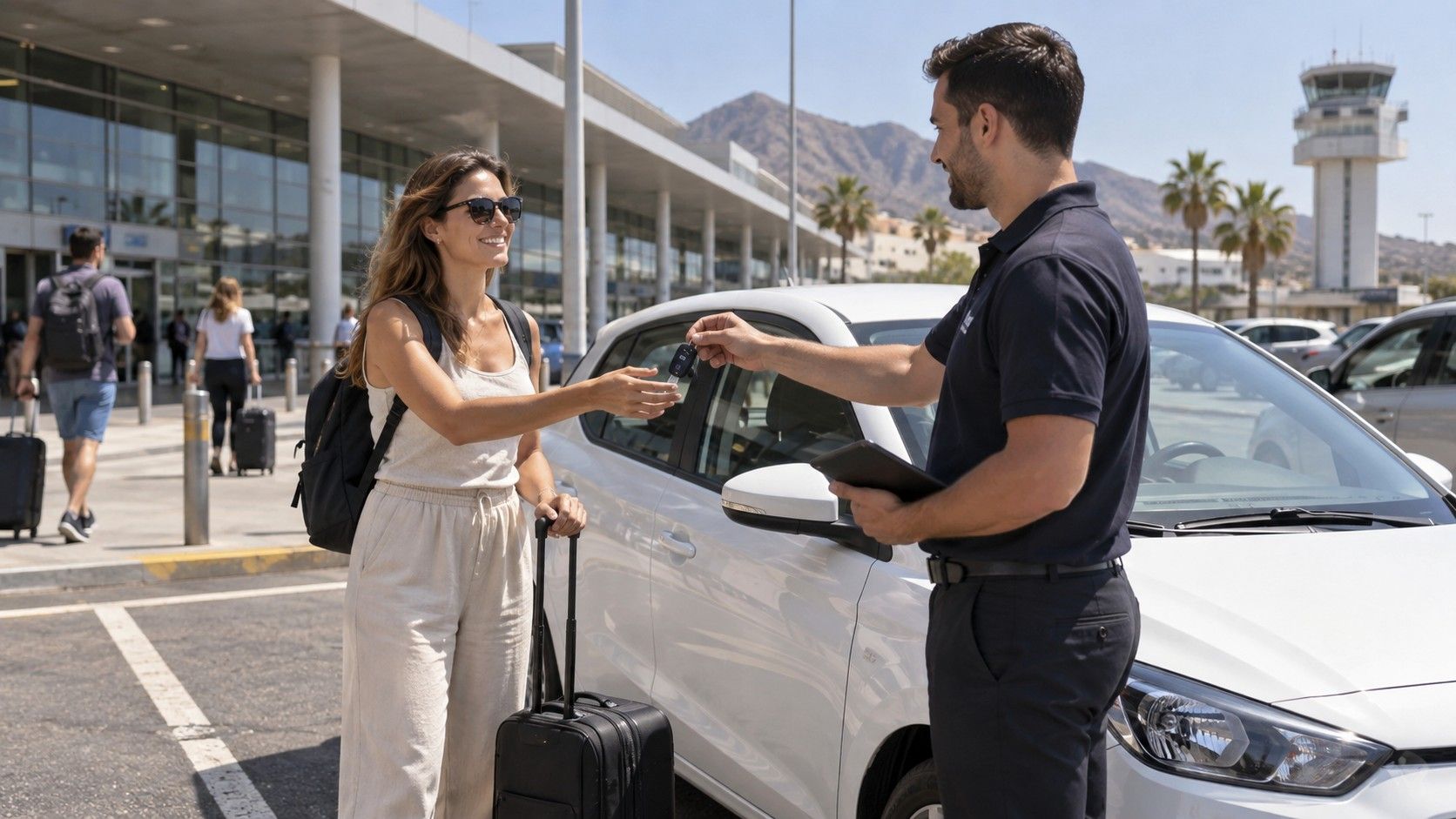
Before confirming PlusCar Tenerife or any other rental, check the exact pickup point for Tenerife South Airport. Airport collection can mean a terminal counter, a meet-and-greet arrangement, a shuttle to a nearby depot or instructions to call after baggage reclaim. Each is workable when expected. Each is irritating when discovered after a long flight with children or oversized luggage. Save the instructions offline and keep the provider’s contact details somewhere accessible.
Read the driver requirements line by line. The licence must be valid for the required period, the booking name should match the person collecting, and any additional driver should be declared if the agreement requires it. Check the age rules, payment card conditions and what cover is included. If a particular point is unclear, asking in writing before payment is far easier than debating it in a car park with a queue behind you.
The fuel policy is worth understanding because it affects the final hour of the holiday. A same-to-same arrangement means photographing the gauge at collection, refuelling near the airport if needed and retaining the receipt. A different arrangement needs equally clear documentation. Do not rely on memory of a comparison site listing; use the terms attached to the reservation. The same applies to mileage, cross-island use and whether a second driver is covered.
Preparing for a Tenerife South Airport collection
Tenerife South Airport is compact enough to be manageable, but arrivals can feel busy when bags emerge slowly and several flights overlap. Do not schedule an exact handover minute based on the landing time. Allow for taxiing, passport control when relevant, baggage reclaim and finding the meeting point. If you are travelling with a pushchair, golf clubs or a large suitcase, tell the group to collect bags before one person goes looking for the rental contact.
Keep three things in a small bag: driving licence, booking reference and the card or identification required by your reservation. A surprising amount of arrival stress comes from searching through a suitcase at the point where staff need a simple answer. Charge your phone before landing, but do not depend on data for the first instructions; screenshots are a safer backup. If the company has an after-hours number, save it before departure rather than hunting through an email while standing outside.
For a south-coast hotel, the first drive is usually motorway-led and uncomplicated once you leave the airport. The complication tends to be the last kilometre: a one-way street in Los Cristianos, an apartment gate in Costa Adeje, or parking that was described vaguely by the host. Enter the full address before you start, look at the final approach on the map, and ask the accommodation whether there is a preferred arrival entrance.
The handover: take five minutes that can save an hour later
| Check | Why it matters | Simple evidence |
|---|---|---|
| Existing exterior marks | Prevents uncertainty about scratches later. | Wide photos of every side and close-ups of marks. |
| Fuel level | Supports the agreed return level. | Dashboard photo before moving. |
| Tyres and windscreen | These are easy to miss in a hurried walk-round. | Quick visual check in daylight or under car-park lights. |
| Controls and warning lights | You need lights, wipers and air conditioning on the first drive. | Turn them on while staff are nearby. |
| Return instructions | Airport routes and drop-off areas can be confusing. | Save written directions and the contact number. |
Photographs are not a sign of distrust; they are a tidy record for both sides. Take them before you leave the bay, and make sure the images are not blurred. Check the boot for a warning triangle, parcel shelf or any loose equipment mentioned in the agreement. Sit in the car for a minute and find reverse, headlights, indicators and wipers. Cars differ, and discovering a control during rain on a motorway slip road is needless pressure.
If something is wrong, report it while you are at the collection point. A missing item, an unrecorded dent or a warning light is much easier to resolve with staff nearby than by email later. Be precise and calm: show the photo, describe the location of the mark and ask for it to be added to the paperwork. This is also the point to confirm the fuel policy and the return address one final time.
Choose the vehicle for Tenerife rather than for a brochure photo
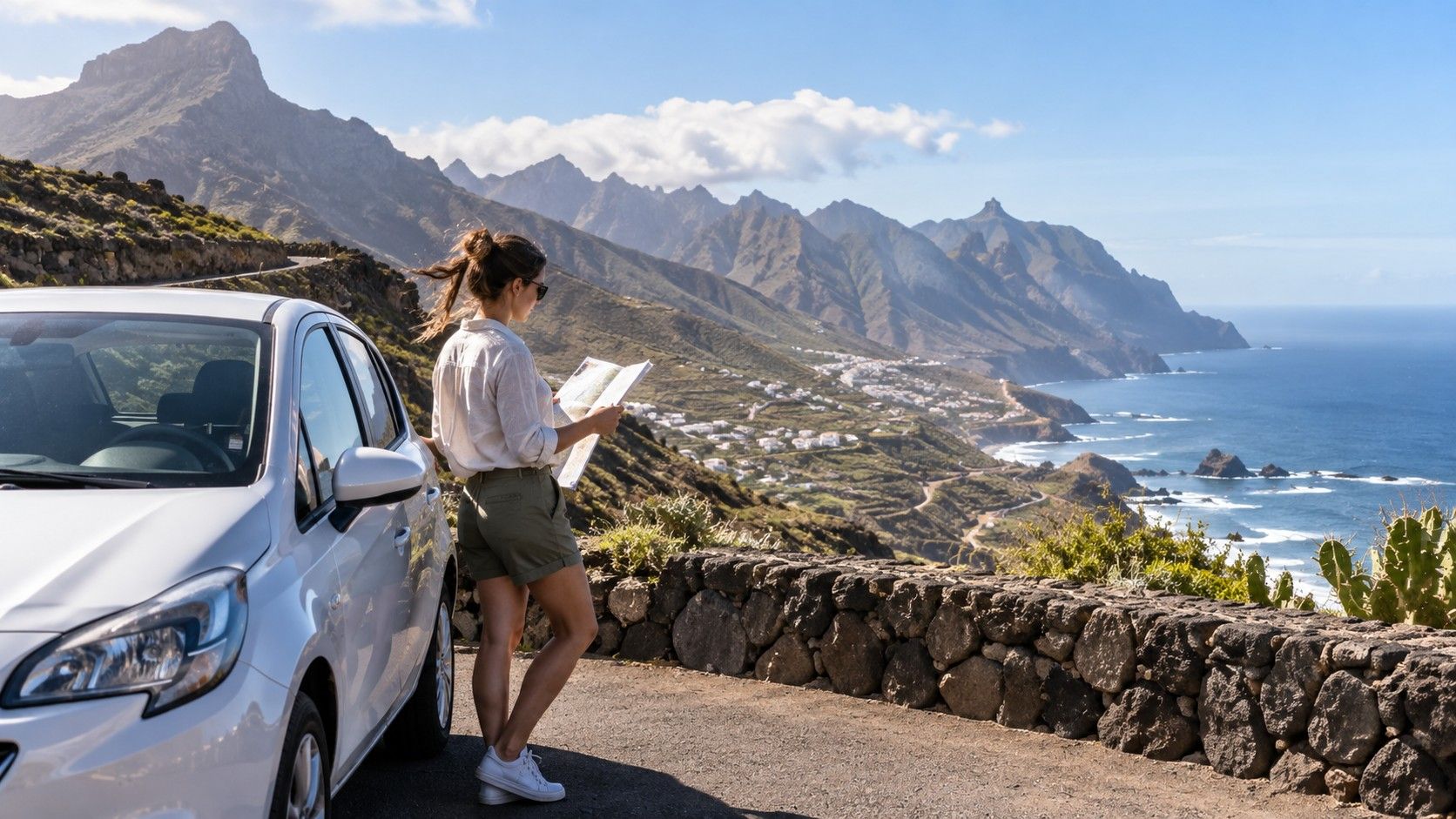
On a straightforward resort holiday, a compact car is often the least stressful option. It fits narrow parking spaces, feels easier on the bends beyond the TF-1 and costs less to fill. For four adults with large cases, the boot capacity may matter more than the number of seats shown in a booking category. Ask yourself where the bags will go on the first drive, not just whether everyone can sit down.
Manual transmission is common, so reserve an automatic if it is essential. This matters more on Tenerife than on a flat city break because mountain roads can involve sustained gradients and frequent bends. You do not need a large vehicle to visit Teide or the west coast, but you do need one you are comfortable controlling. Check the hire category wording: “or similar” means the exact model and its boot layout are not guaranteed.
Think about accommodation parking as well. A villa may have a private space; an apartment in a busy coastal area may use a narrow shared garage or street parking. Ask the host for dimensions, gate instructions or a nearby landmark if parking is part of the reason for hiring. A good vehicle choice makes the first evening easier and makes it more likely that the car will be used for the trips you planned.
Return day deserves the same preparation as collection
Return instructions should not be opened for the first time on departure morning. Tenerife South Airport approaches can become busy around popular flight times, and a wrong turn towards departures or arrivals can eat into a comfortable margin. Check whether the car needs to be returned to a desk, a marked area or a depot, and save the location before leaving your accommodation. If a shuttle is involved, include that in the airport timing.
Refuel according to the agreement and keep the receipt. Photograph the gauge, odometer and car condition after unloading bags, then check the boot, door pockets and phone charging points. Beach towels, sunglasses and parking tickets have a habit of appearing only after security. If the handover is unattended, follow the documented key-return instructions exactly and retain a photo showing the car in its final position where appropriate.
The best use of PlusCar Tenerife reviews is therefore practical rather than emotional. They can tell you where travellers have found friction and which details deserve attention. Your own outcome will be shaped by the reservation terms, a prepared airport collection, a careful vehicle inspection and a return plan that leaves room for ordinary holiday delays.