The useful thing about a car in Tenerife is not the freedom to tick off the whole island; it is the freedom to stop when the light changes, the cloud drops, or a plan has plainly become too ambitious. The distances look small on a map, yet the island keeps folding roads around ravines and up through climate zones. These are the places to visit in Tenerife by car when you want a satisfying day rather than a record-breaking itinerary.
Choose the driving day before choosing the road
I would begin with the forecast split by coast and altitude. A bright morning in Costa Adeje can mean low cloud at Teide, while the north-east is often fresh and damp when the south is dry. That is not a failure of the holiday; it is the normal shape of an island with a high central mountain. Keep Teide for a clear morning, Anaga for a day when you are happy with green views and short walks, and the west for a calm sea-level day.
Pick up the car early enough to avoid learning it in a hotel garage at sunset. On Tenerife, the difficult moments are usually not traffic but tight village corners, steep entrances and a parking bay that is already full. A compact car makes Garachico, La Orotava and mountain viewpoints much less tiring. Fuel is easy to find around the larger towns, but I do not leave a mountain day until the warning light appears.
One main destination and two smaller stops is a sensible rule. The temptation is to join Teide, Masca and Los Gigantes in one loop because the pins almost touch. In reality you lose the day to bends, photo stops and finding somewhere legal to leave the car. Give the road a purpose: crater landscapes, forest, old towns, or coast. The island feels more generous once you stop treating every viewpoint as compulsory.
Drive up to Teide before the cloud takes the view
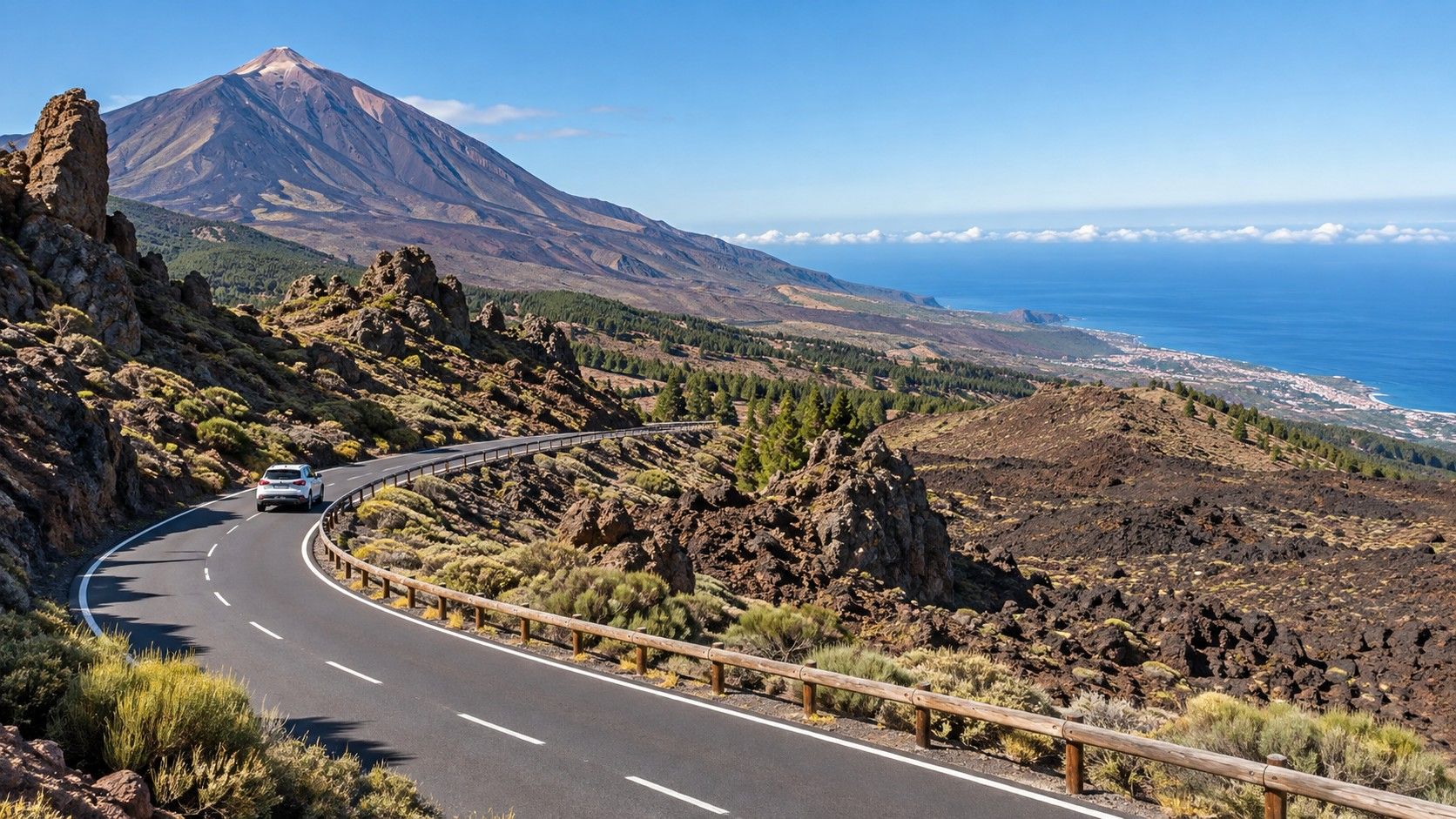
Teide National Park is the classic self-drive day, but its best version starts with a simple question: which side of the mountain is clear? From the south, the TF-21 climbs through Vilaflor and dry pine country; from the north, the road from La Orotava makes the shift from banana-growing slopes to volcanic plateau feel more abrupt. Both are good. I choose the route that gives the clearer sky and resist trying to turn it into a cross-island race.
At the caldera, the scale arrives gradually. First come dark lava fields, then pale rock formations and the cone of Mount Teide appearing between them. Pull-offs are frequent, but some are small and uneven; do not brake sharply for the first empty space you see. The Roques de García area is an easy place for a short walk, though wind can make even a mild day feel cold. Take water, a layer and shoes with grip rather than beach sandals.
The cable car is a separate decision, not an automatic addition. Tickets, operating conditions and access rules can change with wind or weather, so check them before basing the whole day around it. Even without going up, the drive earns its place. On the descent, keep an eye on the brakes and use lower gears where appropriate. I have seen more holiday tension in a hot, hurried downhill car park than on any dramatic mountain road.
Use Anaga for slow bends, cloud forest and a short walk
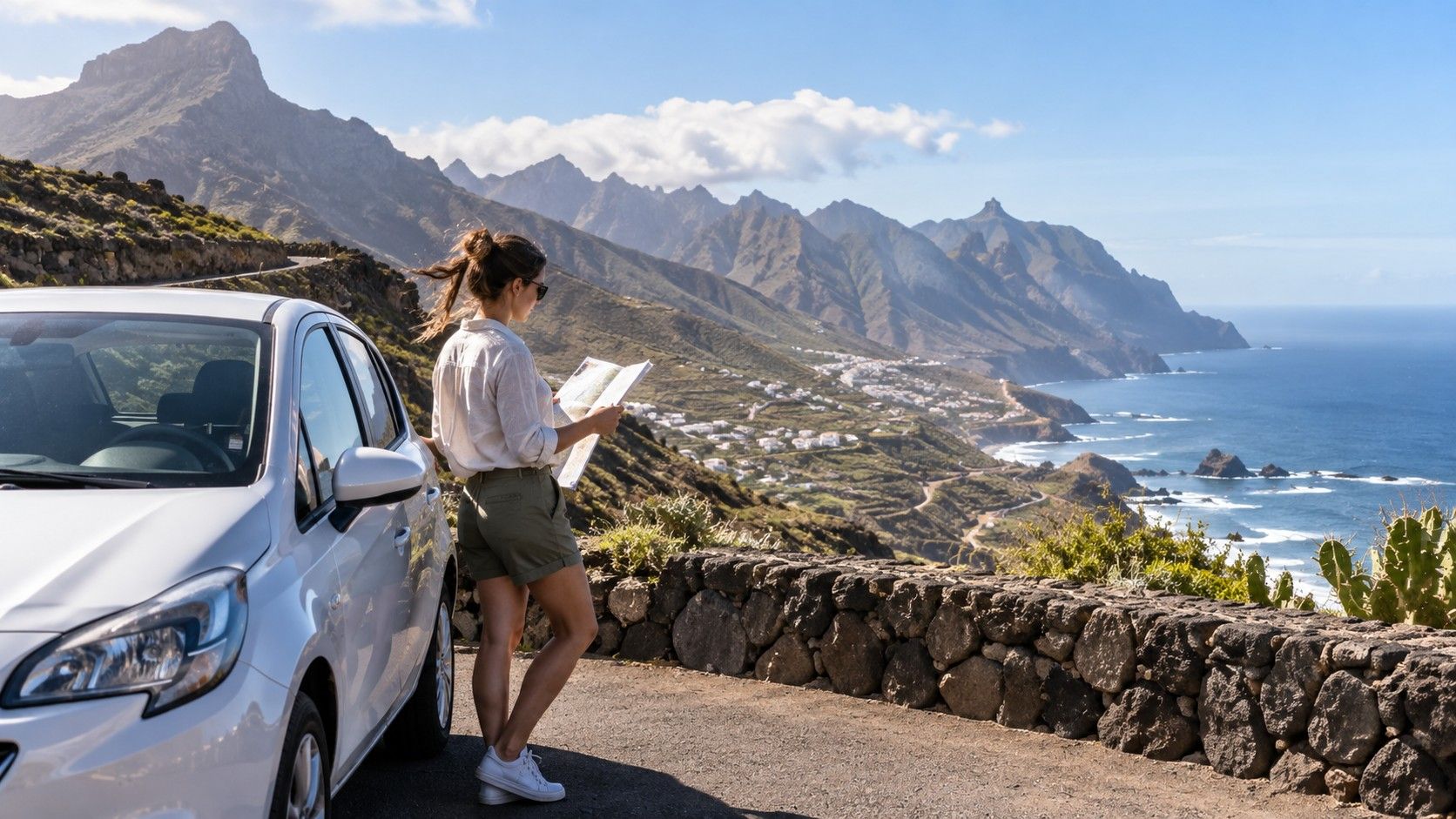
Anaga Rural Park in the north-east is where a hire car becomes genuinely useful. The road beyond La Laguna narrows into ridges, laurel forest and views down to small settlements. It is beautiful when the cloud is moving through the trees, but it is not a drive for someone who wants wide lanes and a fixed arrival time. Let faster traffic pass where it is safe; following a local too closely only makes the day unpleasant.
Start with a coffee or a proper breakfast in La Laguna, then take the high road toward the park rather than rushing straight to the coast. The viewpoints near Cruz del Carmen give a good first look at the terrain. Parking can fill by late morning, especially at popular trailheads, so have a second stopping point in mind. A short signed path is enough to understand the forest; there is no need to force a long hike after two hours of curves.
Taganana and the beaches below it make a strong finish if the road and your stomach are cooperating. The descent feels longer than it looks. Swimming conditions on the north coast deserve respect, and a beach that looks quiet from above may have a serious swell. I like Anaga most when I leave room to turn back: a misty ridge and a local lunch in the hills can be a better memory than insisting on every coastal village.
Make the west coast a day of villages, lava pools and a late lunch
For a lower-stress route, head to Garachico and let the day unfold along the old north-west coast. The town has a compact centre, black volcanic shore and natural pools that are most enjoyable when the sea is calm. Check conditions before assuming a swim; waves can close the pools or make them uninviting. Street parking is limited, so the practical move is to use a signed public area and walk the last few minutes.
From Garachico, I would choose one of two moods. Continue west toward Buenavista del Norte for open coastal scenery and a quieter lunch, or turn inland toward Icod de los Vinos and its older streets. The famous dragon tree draws people, but the surrounding town is worth more than a quick photograph if you wander one block away from the busiest entrance. This is a good route for a day when the summit is cloudy and nobody wants another mountain road.
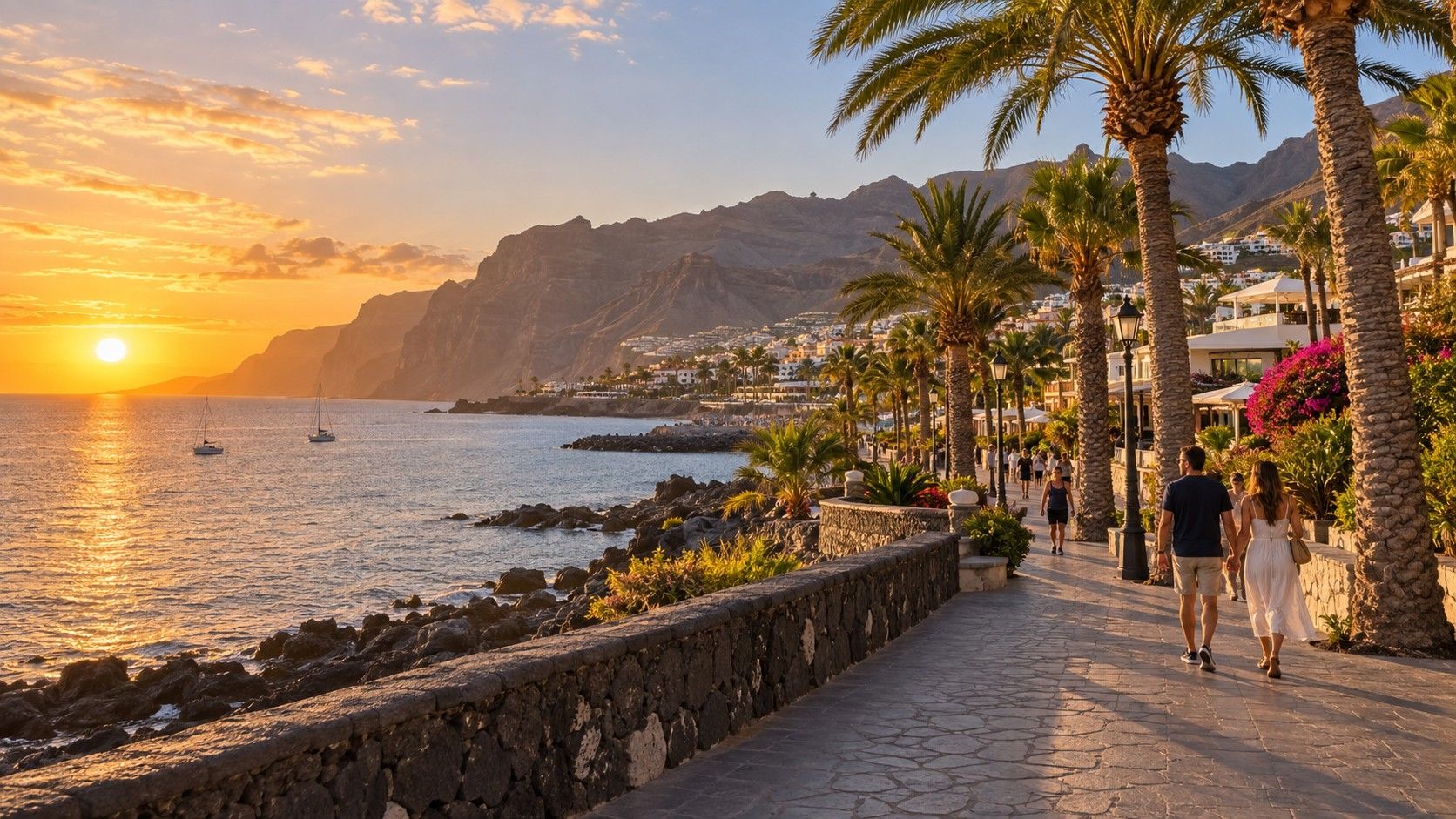
The later light on this side can be lovely, but it also creates a trap: people wait for sunset at Los Gigantes, then discover that the drive back to the north or east is longer in darkness than expected. If you are staying in the south, add the cliffs as the final stop. If you are based around Puerto de la Cruz, keep the coast day local and return before you are tired. Tenerife rewards modest plans.
Approach Masca as a road, not a quick attraction
Masca is the drive people ask about first, and it is the one I would judge most honestly. The valley is striking, the village sits in a dramatic fold of rock, and the road is narrow enough that the experience depends heavily on time of day and your confidence. It is not technically impossible, but it asks for concentration. Avoid adding it to a packed day, avoid rushing it in heavy cloud, and do not assume every bend has room for two impatient cars.
Go early, carry water and be ready to park where directed rather than at the closest possible spot. The village is small; treating it as a short stop with a walk and a drink works better than trying to recreate an old postcard. If the road feels too much, there is no shame in turning around or choosing another route. The island has plenty of good views that do not require white knuckles.
| Drive | Best for | Allow | Useful caution |
|---|---|---|---|
| Teide via Vilaflor | Volcanic scenery | 6-8 hours | Temperature and cloud change fast |
| Anaga from La Laguna | Forest and ridges | 6-7 hours | Narrow roads and full trailhead parking |
| Garachico and north-west | Town and coast | 5-7 hours | Check sea conditions at lava pools |
| Masca loop | Focused mountain drive | 4-6 hours | Do not attempt it when tired or hurried |
Keep the final hour for parking, weather and the way back
The best Tenerife driving days have a little slack built in. A viewpoint may be fogged in, a car park may be full, or you may decide a bakery in La Laguna is more appealing than another kilometre of hairpins. Build your route around daylight, especially in winter, and save offline maps before leaving the motorway. Mobile signal can weaken in parts of Anaga and on quieter mountain stretches.
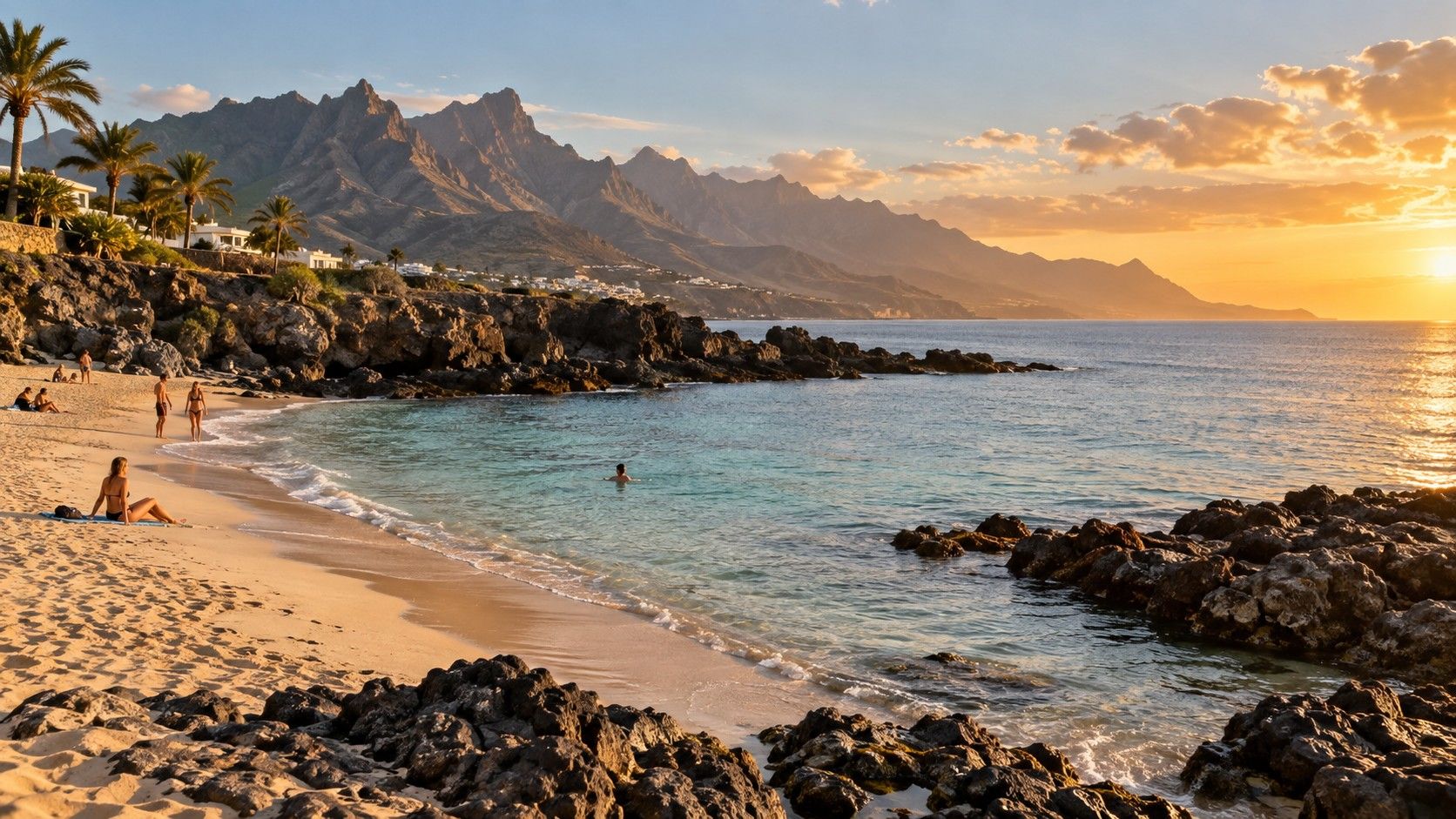
When returning to a resort, do the last fuel stop before the airport zone or the busiest coastal roads. Photograph the car at pick-up and again when you return it, including wheels and fuel gauge; this small habit removes a lot of pointless discussion. Then give yourself permission to stop driving. A cold drink in Garachico, a short promenade in Los Cristianos, or dinner near your base is a better ending than one last heroic detour. That is the real advantage of seeing Tenerife by car: you can choose the pace.