Mirador La Tarta is the sort of stop that can disappear from a Tenerife itinerary because it asks for no ticket, no hike and no dramatic detour. I would still mark it on a Teide day. The roadside pull-in on TF-21 gives a clear read of the island's volcanic layers and pine country, and it works best when treated as a pause between bigger plans rather than a destination requiring an hour.
Decide whether this is your kind of mountain stop
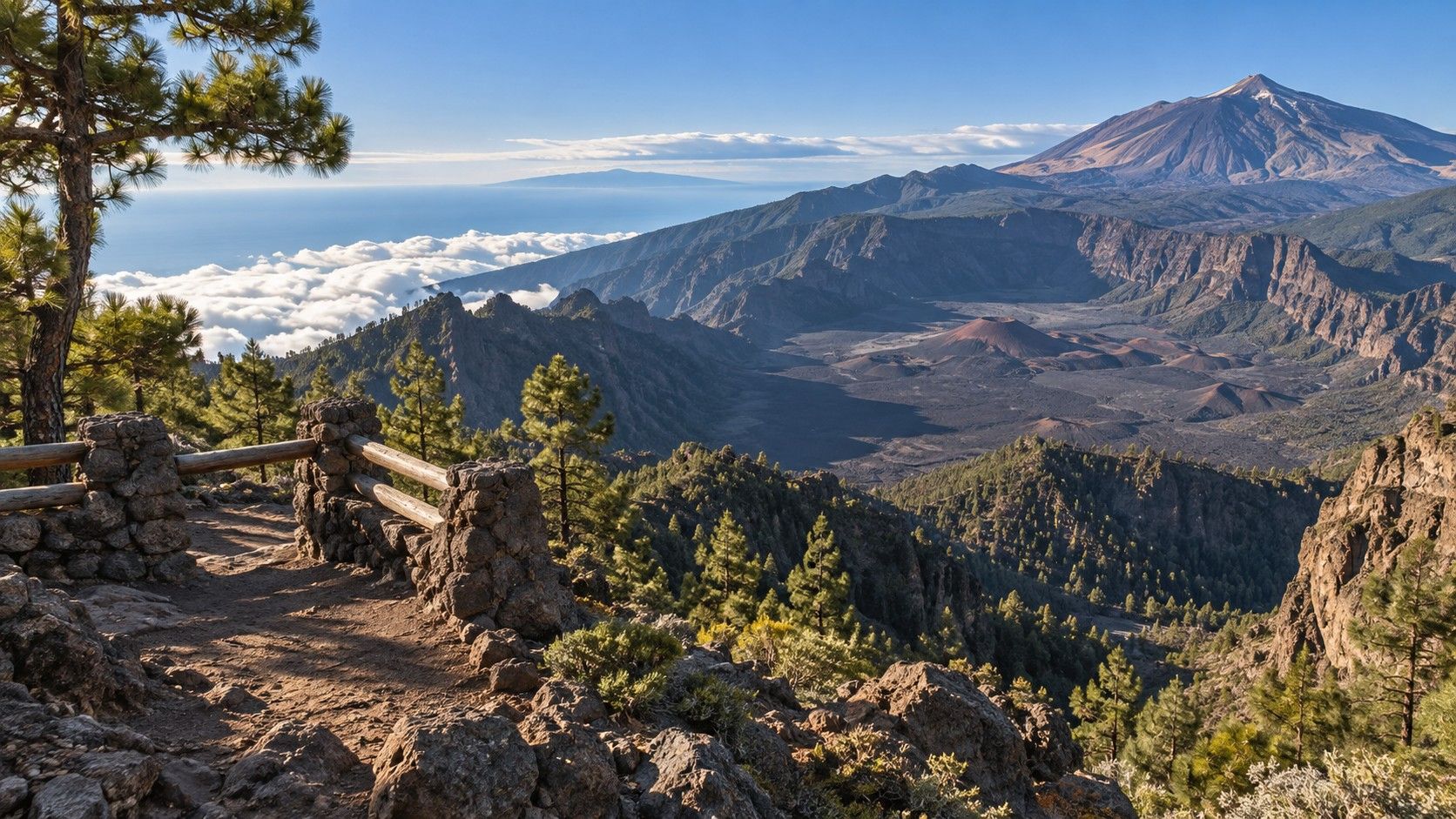
The name refers to the hillside's bands of colour: darker volcanic material, lighter ash and reddish earth piled in a cross-section that resembles a slice of cake. From the marked roadside viewpoint, the explanation is easier to understand than it sounds. You are looking across a slope rather than at a neat signboard exhibit, so light matters and the view has more texture in person than in a phone photo. Mirador La Tarta Tenerife suits travellers who enjoy noticing why the Teide landscape changes from coast to forest to bare caldera. It will disappoint anyone expecting a cliff-edge panorama, a café or a walk with a finish line. I usually allow ten to twenty minutes: enough to look properly, read the terrain and stretch after the bends.
Put it on a TF-21 drive, not on a crowded checklist
The useful approach is to place it on the drive through Teide National Park, often when travelling between the southern resorts and the central mountain area. TF-21 climbs through Canary pine forest and open volcanic ground; the viewpoint gives the journey a small narrative break before the larger stops around the caldera. It pairs naturally with a day that includes Vilaflor, the Teide cable-car area if booked, or the Roques de García walk. Do not build your schedule around a precise arrival minute. Roadworks, slow coaches, cyclists and the temptation to stop at every bend make mountain timing elastic. If you are coming from Costa Adeje, leave room for the altitude change rather than promising yourself a beach lunch at a fixed hour.
Choose light and weather with a little suspicion
Midday can flatten the coloured bands, while low sun tends to pick out more contrast in the slope. That does not mean a sunrise mission is necessary; the mountain road is far more pleasant once you can see its edges, and morning cloud can sit lower down while the high road is clear. Check the Teide forecast on the day, then look outside before committing. A bright south-coast morning does not guarantee visibility at altitude. Wind can make a short stop feel surprisingly cold, and cloud may erase the distant shape of Mount Teide without making the road impossible. On a hazy day I would still stop if passing, but I would not turn back for it. The value is in the geology close by as well as the longer view.
Use the pull-in carefully when traffic is moving fast
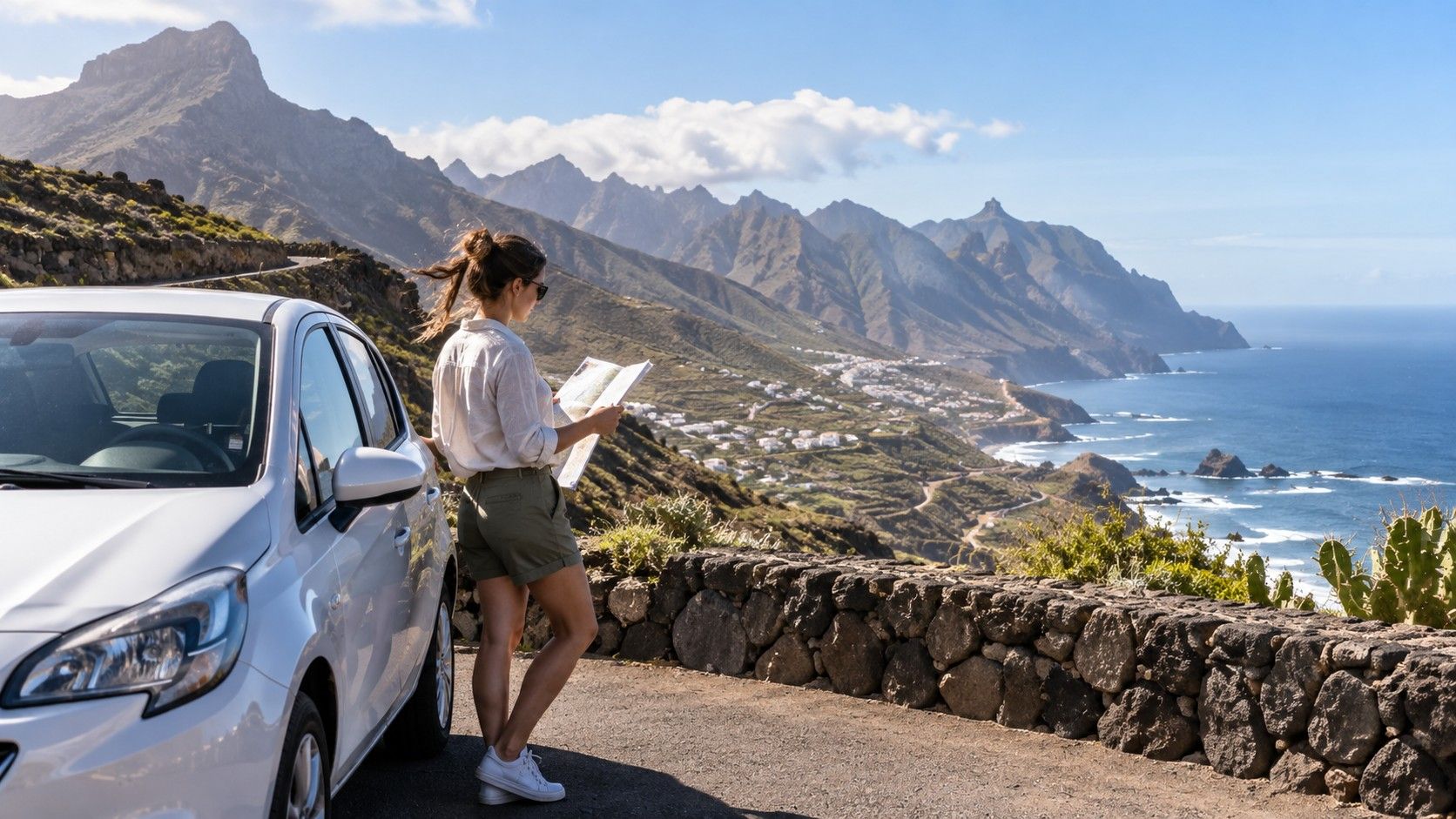
Parking is limited to the roadside space, so this is not a place to arrive with the assumption that a full coach-sized bay will be waiting. Pull in only where the vehicle is completely out of the carriageway, and keep an eye on passengers stepping out on the road side. TF-21 is scenic, but local drivers and service vehicles may take its straighter stretches more quickly than visitors expect. The ground around the viewpoint is uneven volcanic soil rather than a polished attraction surface. Trainers are enough for the immediate stop; sandals make the loose edge less pleasant. There are no facilities to rely on, so use a proper town stop for toilets, water and snacks. A bag left open in the boot is also a poor idea in gusty weather.
Pack for fifteen minutes that may feel like winter
A thin warm layer earns its place here even if the thermometer beside the hotel pool was reading summer numbers. The difference between sea level and the Teide road is felt first in the wind, then in the way children and passengers who stayed in shorts lose interest. Bring water, sunglasses and a charged phone, but avoid treating this as a remote expedition. The sensible preparation is modest: fuel before the mountain section, offline map coverage in case signal fades, and enough clothing for a delay at a viewpoint. If someone in the group is uneasy with narrow roads, let them know this stop involves no steep walk. They can remain close to the car, take in the slope and get moving again without being pressured into a trail.
Combine it with stops that need different amounts of time
| Stop | Best use on the same drive | Practical caution |
|---|---|---|
| Vilaflor | Coffee or an early meal before climbing | Build in time for village parking |
| Mirador La Tarta | Ten-to-twenty-minute geology and photo pause | Roadside spaces can be busy |
| Roques de García | Short established walk among lava formations | Allow longer than the map suggests |
| Teide cable car area | Main event if you have a reservation | Weather and access can change plans |
The table is the key to keeping the day realistic. Mirador La Tarta is a flexible stop; the cable car and a long walk are not. I would make the booked or time-sensitive item the anchor, then use this viewpoint as the breathing space that mountain drives need. If cloud closes in or parking feels awkward, continue without frustration. There are many volcanic views on Tenerife, but this one is rewarding precisely because it does not demand much from you. On the return journey, the lower forest and warmer air make the short halt feel like a useful dividing line between the high island and the coast. Keep the stop modest even when the road is empty. A traveller who turns every pull-in into a photo session arrives at the main trail or booked activity tired and behind schedule. Take the view, notice the layers and leave room for an unexpected clear patch farther up the route. If late-afternoon sun is falling behind cloud, save the photograph for another stop and protect the useful part of the day: a safe drive and enough time for the next planned walk. The stop also works well on the downhill return, when drivers are less preoccupied with reaching the high park before weather changes. In that direction, the layers make a final reminder that the journey itself has been part of the day. Let passengers look for the small details: pine roots gripping dry soil, the changing colour of the cut slope, and the way the road folds into the forest below. Those observations take no extra planning and give the short halt more substance than another rushed photograph.